English

Views: 0 Author: Site Editor Publish Time: 2026-10-12 Origin: Site
Maintaining a strict cleanroom environment is a daily battle against microscopic threats. Structural enclosures act as the facility's first line of defense against contamination, temperature fluctuations, and safety hazards. Unfortunately, harsh chemicals, high-pressure washdowns, and fluctuating humidity often destroy traditional wall and ceiling systems over time.
In this comprehensive guide, we explore how upgrading to a magnesium sandwich panel eliminates these structural vulnerabilities. By understanding the core mechanics of these advanced composites, facility planners can make informed procurement decisions that protect both personnel and the bottom line.
Unmatched Safety: Magnesium oxide composites deliver superior, non-combustible fire resistance, ensuring compliance with rigorous global safety standards, including CE certification.
High ROI & Energy Savings: Proper panel design and premium insulation cores can significantly reduce HVAC energy consumption by minimizing thermal bridging and maintaining stable internal temperatures.
Extreme Durability: These panels are highly resistant to moisture, acid, and alkali, making them the optimal choice for biochemical laboratories, dairy processing facilities, and projects in high-humidity geographical regions.
Seamless Installation: Standardized modular designs facilitate rapid cleanroom construction, flush surface integration, and high modular flexibility for future facility expansions.
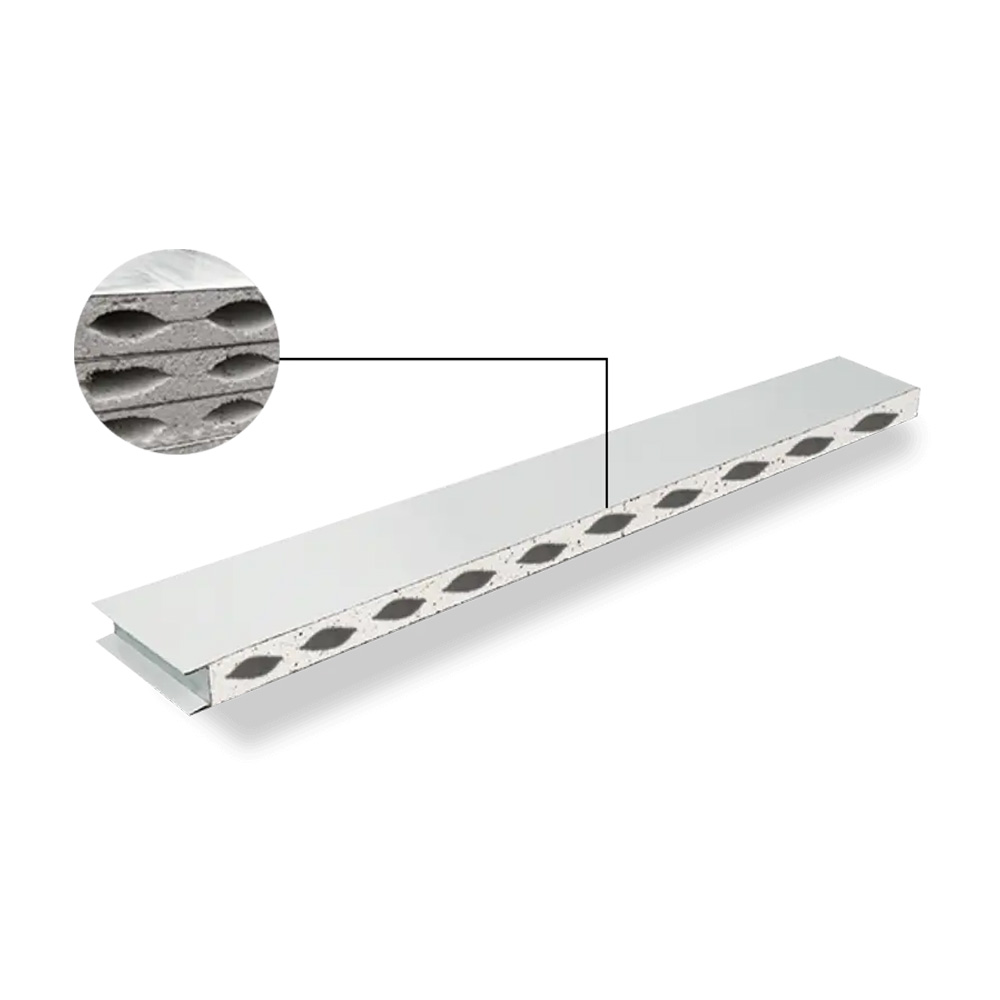
A magnesium composite panel is a highly specialized building material engineered specifically for controlled environments. It features two outer skins made of high-density Magnesium Oxide board, bonded securely to an inner insulating core. This structural configuration provides exceptional load-bearing capacity and thermal resistance while maintaining the ultra-smooth, particulate-free surface required in cleanroom architecture.
The exterior layers consist of a naturally occurring, highly durable mineral. Unlike gypsum or standard steel, the outer skin does not harbor mold or degrade when exposed to continuous moisture. The internal core determines the specific performance metrics of the panel. Facility planners can choose from several variations based on project requirements. A hollow core offers excellent structural rigidity and moisture resistance. A honeycomb core combines lightweight properties with high compressive strength, ensuring the panel remains completely flat over large spans. For temperature-sensitive environments, a double rock wool core provides the highest level of thermal insulation and acoustic dampening.
To ensure compatibility with global cleanroom aluminum profiles and framing systems, these panels are manufactured to exact dimensional tolerances. The industry standard is the 50mm thick composite panel, widely utilized for both wall partitions and walkable ceiling systems.
Specification Parameter | Standard Industry Range | Common Cleanroom Application |
|---|---|---|
Panel Thickness | 50mm, 75mm, 100mm, 150mm | 50mm for standard partitions and ceilings |
Effective Width | 950mm, 1150mm | 1150mm for rapid modular assembly |
Standard Length | Customized 1000mm to 6000mm | Cut to specific floor-to-ceiling heights |
Outer Skin Material | Color Steel, Stainless Steel, Galvanized | Pre-painted color steel with anti-static finish |
Fire Rating | Class A Non-combustible | High-risk pharmaceutical and chemical labs |
For facility managers and lab planners, the selection of wall and ceiling enclosures directly impacts the long-term operational viability of the cleanroom. Implementing a magnesium oxide cleanroom panel addresses several critical pain points inherent in traditional construction materials.
Cleanrooms in the biochemical and pharmaceutical sectors undergo rigorous daily sanitization protocols. Consider a BSL-3 lab undergoing its third vaporized hydrogen peroxide decontamination of the week. Under such chemical stress, traditional panels often corrode, discolor, or delaminate. Conversely, MgO composites feature chemically inert outer surfaces that withstand continuous exposure to harsh cleaning agents without structural degradation. The high-density skin also provides superior impact resistance, preventing dents from equipment carts and heavy machinery.
Moisture is the undisputed enemy of cleanroom integrity. It often leads to microbial growth and material warping. Magnesium Oxide is inherently water-resistant and retains its structural integrity even when exposed to high humidity. This makes it an absolute game-changer for construction projects in tropical climates, as well as wet-processing facilities like dairy and beverage plants.
Maintaining ISO-grade particulate standards requires surfaces that actively resist contamination. The surface of these panels is ultra-smooth and non-porous. This eliminates microscopic crevices where bacteria, fungi, and particulate matter typically accumulate. They can also be coated with specialized anti-static finishes that prevent the accumulation of airborne dust, a critical requirement for microelectronics manufacturing.
Recent market analyses highlight a definitive shift in cleanroom construction methodologies. Driven by the rapid expansion of the electric vehicle battery sector and stringent post-pandemic biosafety regulations, demand for high-performance structural enclosures has surged. Modern manufacturing demands environments with ultra-low dew points and zero tolerance for combustible materials. Consequently, industry leaders are rapidly pivoting away from legacy plastics like polyurethane and polystyrene. Instead, they are adopting mineral-based composites to future-proof their investments. This transition not only ensures compliance with evolving international fire codes but also aligns with modern sustainability mandates by utilizing materials with a lower carbon footprint.
Safety and regulatory compliance remain primary drivers in cleanroom procurement. An accidental fire in a highly oxygenated or chemical-rich laboratory can result in catastrophic loss of life, equipment, and research data. Therefore, facility planners must prioritize materials that offer verifiable, uncompromising fire protection.
Magnesium sandwich panels achieve a Class A non-combustibility rating, which is the highest standard for building materials. When exposed to extreme temperatures or direct flame, the material does not burn, melt, or drip. More importantly, it does not release toxic, black smoke during a fire event. Facilities prioritizing ultimate thermal protection often specify a fire resistant cleanroom panel to meet stringent local building codes and provide critical evacuation time for personnel.
For multinational contractors and global biotech firms, utilizing materials that meet international regulatory frameworks is non-negotiable. CE-approved fire-resistant panels verify that the product has passed rigorous European safety, health, and environmental protection requirements. Selecting certified panels guarantees regulatory compliance during facility audits and frequently results in significantly lower commercial property insurance premiums due to the mitigated risk profile.
While the initial procurement cost of premium cleanroom panels may be higher than budget alternatives, the long-term Return on Investment is realized through substantial operational savings. The most significant ongoing expense in any cleanroom is the HVAC system required to maintain strict temperature, humidity, and pressurization parameters.
The thermal resistance of a cleanroom enclosure dictates how effectively it prevents heat transfer between the controlled environment and the external facility. Panels utilizing a rock wool or high-density honeycomb core offer exceptional thermal insulation. This high thermal resistance ensures that the internal temperature of the cleanroom remains stable, regardless of external temperature fluctuations in the surrounding warehouse or manufacturing floor.
The logic behind energy reduction is straightforward. Superior insulation combined with airtight installation joints prevents thermal bridging and air leakage. When a cleanroom is properly sealed, the mechanical strain on the HVAC system is drastically reduced. The chillers, heaters, and air handling units do not have to work continuously to compensate for energy loss. Over the lifespan of a facility, this optimized thermal envelope can slash HVAC energy consumption by a significant margin, delivering a massive financial return to the facility owner.
The versatility of the magnesium composite makes it the material of choice across a diverse range of high-tech industries. Different sectors face unique environmental challenges, and the structural enclosure must be tailored to address those specific operational demands.
Biochemical laboratories operating under strict biosafety standards require enclosures that are virtually impenetrable. These facilities demand secure 50mm partitions that offer uncompromising chemical resistance against frequent decontamination cycles. The anti-bacterial surfaces prevent cross-contamination between research batches, while the robust structural integrity supports the installation of heavy laboratory equipment and pass-through boxes.
In the pharmaceutical sector, adherence to Good Manufacturing Practices is strictly enforced by regulatory agencies. Compliance mandates smooth, easily cleanable surfaces with no sharp corners or exposed joints where powder or microbes could hide. Magnesium panels are designed to integrate seamlessly with flush cleanroom doors, windows, and coving systems. This creates a monolithic, sterile envelope ideal for drug formulation and packaging rooms.
Food processing involves high-moisture environments subjected to frequent, high-pressure hot water washdowns. Traditional steel panels may rust, and gypsum-based panels will inevitably swell and harbor mold. The inherent moisture resistance of the magnesium skin ensures that the panels withstand continuous washdowns without warping, rusting, or shedding particles into the food production line.
For contractors and builders, the efficiency of the installation process directly impacts labor costs and project timelines. Magnesium panels are engineered for modular cleanroom construction, offering a highly systematic and predictable installation methodology.
Successful cleanroom construction begins with meticulous site preparation. The facility floor must be properly leveled, and a comprehensive layout must be mapped out. Galvanized steel or aluminum U-channel tracking systems are securely anchored to the floor to serve as the foundational base for the wall panels. Accurate laser tracking ensures that the panels will align perfectly flush, preventing structural stress and ensuring airtight integrity.
These advanced panels utilize precise joining mechanisms to create a seamless wall system. The most common methods are the tongue-and-groove system or the use of specialized H-shaped aluminum profiles. These joining systems allow the panels to interlock securely, creating a completely flush and airtight seal. Because the panels are factory-cut to exact specifications, on-site modification is minimized. This significantly reduces the generation of construction dust and accelerates the overall build schedule.
A critical phase of the installation is the final sealing process. To prevent cold bridges—areas where thermal transfer occurs due to structural gaps—all panel joints, corners, and ceiling intersections must be meticulously sealed. Installers use cleanroom-grade, non-outgassing silicone sealants to fill any micro-gaps. Additionally, aluminum or PVC cleanroom coving is installed at all wall-to-floor and wall-to-ceiling junctions to eliminate sharp angles, thereby removing potential contamination traps where dust and bacteria could accumulate.
When designing a controlled environment, facility managers and lab planners must evaluate structural enclosures based on empirical data, lifecycle costs, and safety compliance. For decades, traditional materials like Expanded Polystyrene, Polyurethane, and standard aluminum honeycomb have dominated the market. However, as regulatory standards for fire safety and contamination control become more stringent, magnesium composites have emerged as a superior alternative.
Expanded Polystyrene panels have historically been favored for their low initial procurement cost and lightweight nature, making them easy to handle during installation. However, they present a severe operational risk regarding fire safety. The material is highly combustible. When exposed to high temperatures, it acts as a fuel source and melts, releasing highly toxic black smoke. This characteristic makes it entirely unsuitable for high-risk environments. In stark contrast, magnesium oxide is classified as a non-combustible material. Under intense thermal stress, it does not ignite, melt, or emit toxic fumes, providing critical evacuation time.
Polyurethane panels are widely recognized for their exceptional thermal resistance. They are highly efficient at minimizing heat transfer, which makes them a staple in cold storage facilities. Despite these benefits, they share a similar vulnerability regarding fire performance. While fire-retardant variants exist, they can still degrade and release toxic gases during a severe fire event. Furthermore, they are susceptible to degradation when repeatedly exposed to harsh chemical disinfectants. Magnesium panels provide a much higher degree of structural rigidity and impact resistance, alongside a dense, non-porous surface that resists aggressive acids and alkalis.
Aluminum honeycomb panels are a premium cleanroom material known for being exceptionally lightweight while maintaining high compressive strength. They are entirely non-combustible and do not outgas, making them suitable for semiconductor cleanrooms. However, standard aluminum honeycomb panels suffer from poor acoustic insulation and low thermal resistance. Because aluminum is a highly conductive metal, these panels can create thermal bridging issues if not engineered perfectly. Magnesium composites, particularly those utilizing a double rock wool core, offer a more balanced and cost-effective solution. The combination of dense boards and fibrous rock wool provides superior acoustic dampening and thermal mass, significantly outperforming standard aluminum honeycomb in maintaining stable internal temperatures.
Performance Metric | Magnesium Oxide Composite | Expanded Polystyrene | Polyurethane | Aluminum Honeycomb |
|---|---|---|---|---|
Fire Resistance Rating | Class A Non-Combustible | Highly Combustible | Combustible Toxic Smoke | Class A Non-Combustible |
Chemical & Moisture Resistance | Excellent | Poor | Moderate | Excellent |
Thermal Insulation | High with Rock Wool Core | Moderate | Excellent | Low |
Acoustic Insulation | Excellent | Poor | Moderate | Poor |
Structural Rigidity | High | Low | Moderate | High |
Selecting the correct material is only half the equation. Partnering with a reliable manufacturer is equally critical to the success of a cleanroom construction project. The manufacturing tolerances, quality control protocols, and supply chain stability of the vendor will directly impact the installation timeline and the long-term performance of the structural enclosure.
Facility managers and contractors must require documented proof of quality and safety from potential suppliers. A reputable manufacturer should operate under strict quality management systems to ensure batch-to-batch consistency. When evaluating suppliers, request empirical testing data and third-party certifications. For international projects, CE approval is a non-negotiable baseline. Furthermore, request specific fire testing reports to verify the non-combustibility claims.
Every cleanroom facility has unique spatial, mechanical, and operational requirements. Off-the-shelf panel dimensions often lead to excessive on-site cutting. This generates particulate contamination, increases labor costs, and wastes material. A high-tier manufacturer will offer extensive customization capabilities. This includes producing panels in custom lengths to match specific ceiling heights, thereby eliminating horizontal joints on walls. Buyers should also look for suppliers capable of integrating different core materials based on the specific zone's requirements. Providing factory-pre-cut openings for HVAC return air grilles, cleanroom windows, and personnel doors is a significant advantage, ensuring precise dimensions and sealed edges.
Investing in a premium magnesium panel system ensures long-term safety, extreme durability, and uncompromising structural integrity for any controlled environment. Whether you are constructing a highly regulated biotech laboratory, a GMP-compliant pharmaceutical plant, or a high-moisture dairy facility, these specialized enclosures provide the most reliable defense against contamination and fire hazards. By significantly reducing HVAC energy loads and lowering insurance liabilities, they deliver an outstanding return on investment over the facility's lifespan. We encourage facility planners and contractors to visit yxcleanroompanel.com to evaluate our full range of certified cleanroom solutions. Contact our expert engineering team for a custom quote, request physical samples, or download our comprehensive technical specification sheets to select the exact panel configuration that aligns with your project requirements.
The industry standard thickness for cleanroom wall partitions and ceiling panels is 50mm. This dimension provides an optimal balance between structural rigidity, insulation capability, and spatial efficiency. Depending on the specific engineering requirements of the facility, panels can be manufactured in varying thicknesses ranging from 50mm up to 150mm. Thicker panels are typically specified for exterior envelope walls, high-load walk-on ceilings, or environments requiring extreme thermal resistance to minimize HVAC energy consumption.
While they are not designed to be submerged continuously underwater, they are exceptionally water-resistant. Unlike gypsum or standard wood-based composites, the material does not absorb ambient moisture. This means it will not warp, swell, or delaminate in high-humidity environments. This makes them highly suitable for dairy facilities, wet-processing plants, and geographic regions with tropical climates. Their moisture resistance ensures they maintain structural integrity despite the frequent, heavy liquid chemical washdowns required in strict sanitization protocols.
Integrating Class A non-combustible materials into your facility's structural design significantly alters its risk profile. Because these panels do not ignite, contribute to flame spread, or release toxic smoke, they drastically reduce the potential for catastrophic fire damage. Commercial property insurers and underwriters heavily weigh construction materials during risk assessments. Utilizing verified, non-combustible panels often facilitates easier compliance with strict local fire codes and can lead to substantial reductions in long-term property insurance premiums.
Yes, they are highly suitable for walk-on ceiling applications. Cleanroom ceilings often require maintenance personnel to access HVAC filters, ductwork, and electrical systems housed in the interstitial space above. Panels reinforced with a high-density rock wool or honeycomb core possess excellent compressive strength and high load-bearing capacities. When properly supported by an engineered suspension system, they safely accommodate the point loads of maintenance staff and equipment while adhering to strict deflection limits.
No, the installation process is designed for high efficiency and modularity. These panels are engineered with standardized tongue-and-groove edges or are designed to integrate seamlessly with specialized aluminum H-profiles. This modular design allows contractors to assemble walls and ceilings rapidly, reducing overall construction timelines. To ensure a flush, airtight environment compliant with ISO standards, the joints are simply sealed with cleanroom-grade, anti-fungal silicone, minimizing the need for specialized heavy machinery and reducing on-site labor costs.
For ultra-clean environments like ISO Class 5 or lower, particulate shedding is a primary concern. Magnesium panels feature a highly dense, non-porous outer skin that does not shed particles over time. When coated with specialized anti-static and anti-microbial finishes, they actively repel airborne dust and prevent biological growth. Paired with flush-mount installation techniques and cleanroom silicone sealing, they easily meet the rigorous air cleanliness standards required for semiconductor manufacturing and sterile compounding pharmacies.
Lead times depend heavily on the manufacturer's production capacity and the complexity of the customization. Standard 50mm panels with common dimensions can often be dispatched quickly. However, custom lengths, pre-cut window openings, or specialized core integrations typically require a lead time of three to five weeks. It is crucial to finalize your facility layout and coordinate closely with your supplier early in the project timeline to ensure materials arrive precisely when the site is prepped for installation.