English

Views: 0 Author: Site Editor Publish Time: 2026-10-11 Origin: Site
I have seen too many facility managers blow their construction budgets on over-engineered walls. Building a controlled environment requires a delicate balance. You must meet strict regulatory compliance without bankrupting the project. For decades, contractors defaulted to traditional dense materials. Those heavy options often overcomplicate structural needs for less demanding spaces.
Enter the paper honeycomb sandwich panel. It serves as an incredibly cost-effective and highly rigid alternative. This material is actively transforming modern facility design. In this comprehensive guide, we will explore the anatomy, engineering benefits, and practical purchasing considerations of this innovative material. My goal is to help you optimize your next light industrial project with real-world engineering insights.
Structural Efficiency: These partitions utilize a hexagonal kraft paper core. They offer an exceptional strength-to-weight ratio for modular construction.
Budget Optimization: They serve as the most economical solution for light cleanrooms commonly found in electronics, packaging, and non-sterile manufacturing.
Operational Agility: By drastically reducing dead load, they minimize installation time, labor expenses, and building structural strain.
Material Performance: Chemically treated cores provide adequate fire retardancy and excellent surface flatness. They easily outperform basic expanded polystyrene foam in rigidity.
Vendor Selection: Partnering with a specialized manufacturer ensures compliance with ISO standards and guarantees long-term durability.
Before diving into material specs, we need to look at where the industry is heading. Recent market data shows a massive macroeconomic shift toward modular and flexible manufacturing spaces. As the global electronics, semiconductor, and precision packaging sectors boom, facility managers are moving away from permanent masonry or heavy drywall.
Instead, the demand for modular wall systems has surged dramatically. Production lines change rapidly. Companies need walls that can be erected in weeks, not months. This industry-wide push for rapid deployment and future-proofing perfectly aligns with the adoption of lightweight core technologies. Engineers are realizing that specifying heavy fire-rated walls for a simple dust-controlled packaging room is a massive waste of resources.
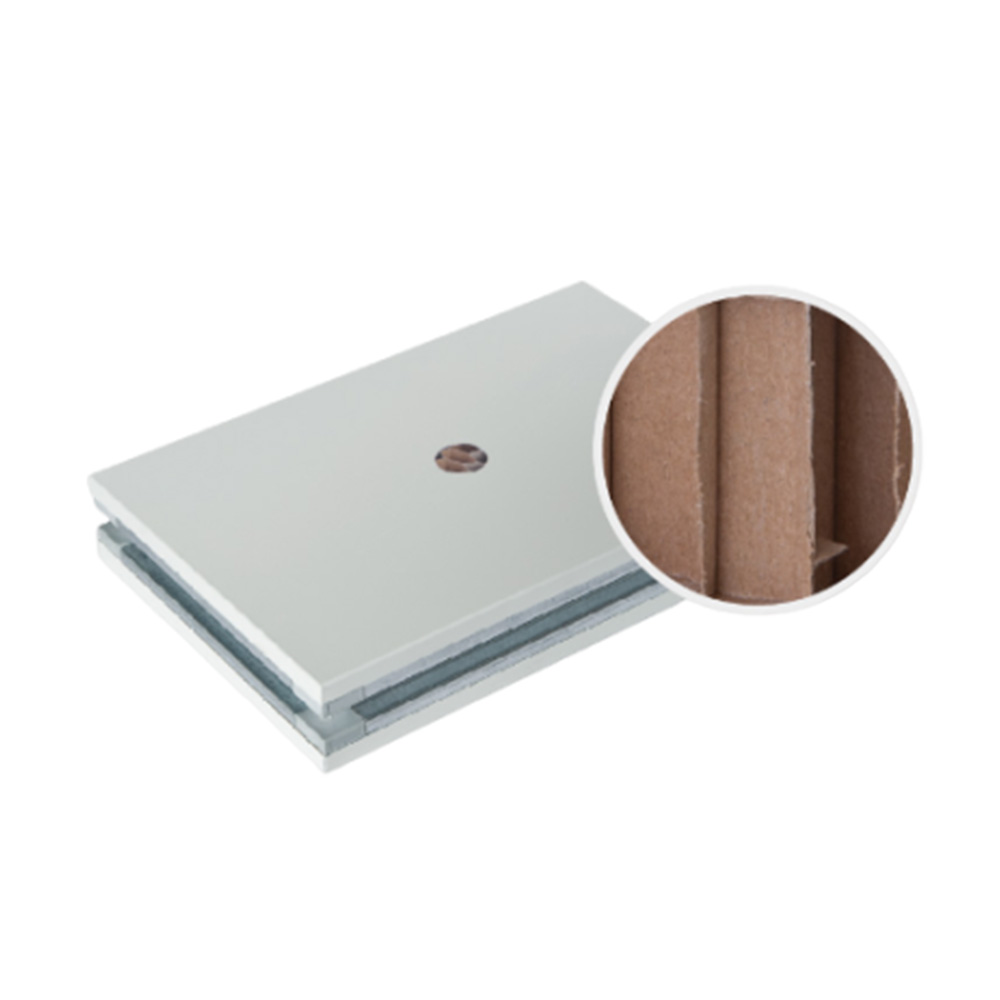
To make informed decisions, technical buyers must first understand the fundamental material science behind their selected wall structures. The anatomy of these partitions is engineered to maximize stability while minimizing mass. Cut into one of these panels on the job site, and you will immediately notice the distinct internal geometry.
The core relies on a hexagonal structure directly inspired by natural beehives. In mechanical engineering, the hexagonal matrix is widely recognized as one of the most efficient geometric shapes for distributing weight. It absorbs impact across a broad surface area beautifully.
We start with high-strength kraft paper. During the manufacturing process, suppliers saturate this paper with specialized flame-retardant resins. This crucial step ensures the material meets standard industrial safety codes. The vertical cellular structure acts like thousands of miniature I-beams. When pressure hits the steel face, these tiny vertical cells distribute the mechanical load evenly. This prevents localized crushing or structural failure.
While the core provides the lightweight volume, the outer skins deliver the hygiene and durability required in controlled environments. Typically, the facings feature color-coated steel, galvanized steel, or stainless steel. Skin thickness usually ranges from 0.4mm to 0.8mm depending on the specific sanitation protocols of your facility.
Furthermore, the kraft paper core and the metal skins are permanently bonded together. Manufacturers use high-strength, low volatile organic compound polyurethane or epoxy adhesives. This bonding process occurs under immense pressure in a continuous lamination machine. The result is a remarkably rigid composite material. It brilliantly leverages the tensile strength of steel alongside the compressive strength of the paper matrix.
Contractors evaluate building materials based on strict performance metrics and tight project constraints. Integrating a cleanroom honeycomb panel offers specific advantages. These benefits directly address common pain points in facility design, particularly regarding logistics and handling.
One of the primary engineering triumphs of this design is its exceptional strength-to-weight ratio. Traditional solid core panels carry significant dead weight. That weight complicates handling and structural engineering. In contrast, the cellular nature of the paper core means the partition is composed mostly of air. Despite this low density, the continuous geometric matrix prevents the metal skins from buckling under compression. The structure remains incredibly light without sacrificing the rigidity required for tall partition walls.
Budget constraints dictate almost every industrial construction project. When outfitting massive facilities, raw material costs escalate rapidly. Paper cores require significantly less raw material to manufacture compared to solid mineral wool or aluminum matrices. This reduction in volume translates directly to lower procurement costs. Additionally, the lower weight results in substantial freight savings. You can transport more square footage per truckload without exceeding highway weight limits.
In a controlled environment, surface topography is critical. Any warping, dimpling, or unevenness creates microscopic ledges. Dust and particulate matter love to accumulate on those ledges. The rigid bonding of the metal skins to the dense hexagonal core ensures superior surface flatness. It prevents the metal from flexing over time. Technicians get a perfectly smooth surface that is easy to wipe down and sanitize daily.
It is important to qualify the specific use-case for these materials. Heavy-duty pharmaceutical labs handling live viruses require entirely different specifications. However, these partitions are the absolute optimal choice for light cleanrooms.
A light cleanroom typically refers to environments classified between ISO 7 and ISO 9. These are controlled spaces requiring rigorous particulate filtration and environmental management. They do not involve high moisture levels, extreme fire risks, or heavy bio-hazard protocols. Examples include secondary packaging lines, precision component assembly, and testing laboratories. In these dry settings, deploying heavier and more expensive materials is simply unnecessary over-engineering.
Imagine retrofitting a second-story mezzanine inside an older warehouse. The floor load-bearing capacity is strictly limited. Using a lightweight cleanroom panel is a strategic engineering decision here. By drastically reducing the dead load of the walls, engineers can safely construct expansive controlled zones. You completely avoid requiring expensive steel reinforcements to the building foundation.
Industrial operations require agility. When contractors uncrate these materials on-site, the immediate benefit is obvious. They are incredibly manageable. Construction crews handle them easily without heavy lifting equipment like cranes or industrial hoists. Workers maneuver, align, and secure the walls rapidly. This slashes labor hours. If a facility needs to expand its layout next year, these modular units can be demounted and relocated with minimal disruption.
To make an objective purchasing decision, technical buyers must compare this technology against other common core materials. Selecting the wrong core leads to inflated construction costs or compromised facility compliance. Here is how they stack up.
Aluminum is widely regarded as the premium tier. Because the core is entirely metallic, it is completely non-combustible and offers extreme compressive strength. However, this premium performance comes at a significantly higher price point. For facilities lacking absolute non-combustibility mandates, aluminum is often an over-specification.
Rock wool remains the standard choice for high-fire-risk environments. It offers extended fire resistance ratings. Conversely, rock wool is exceptionally heavy. Installing it requires robust structural support and intensive physical labor. Moreover, if a rock wool partition is punctured, it can release microscopic mineral fibers into the environment. That is a disaster for air quality. The lightweight paper alternative is much cleaner to cut and poses zero risk of particulate shedding.
Expanded polystyrene foam is often utilized for its low cost and thermal insulation. Standard foam generally lacks inherent structural rigidity. This leaves walls susceptible to denting or bowing upon impact. More critically, basic foam has poor fire ratings and emits toxic smoke upon combustion. Treated kraft paper cores offer superior compressive strength and a much safer environmental footprint.
Feature | Paper Honeycomb | Aluminum Honeycomb | Rock Wool | EPS Foam |
|---|---|---|---|---|
Weight Profile | Very Light | Light | Very Heavy | Very Light |
Procurement Cost | Low to Moderate | High | Moderate to High | Low |
Fire Resistance | Moderate Flame Retardant | Excellent Non-Combustible | Excellent Non-Combustible | Poor to Moderate |
Structural Rigidity | High | Very High | High | Low to Moderate |
Because they perfectly balance cost, weight, and rigidity, these partitions are engineered specifically for targeted industrial sectors. Understanding where they are successfully deployed helps contractors align material specifications with real-world requirements.
The manufacturing of microelectronics and printed circuit boards requires expansive, dry, and dust-free environments. These facilities often demand rapid construction schedules and massive wall spans. The lightweight nature of these materials allows contractors to erect large anti-static partitions quickly without overloading the building structure.
While primary food processing zones handling raw meat require heavy-duty washdown walls, secondary packaging areas have different needs. Zones dedicated to wrapping, boxing, and sealing finished goods simply require clean, wipeable surfaces. These panels deliver the necessary smooth steel facings without the unnecessary expense of moisture-resistant materials.
Aerospace component assembly often takes place in massive warehouse environments. Creating a room-in-room enclosure means the new structure must often be self-supporting. The exceptionally low weight ensures that large-scale dust control tents can be built safely and efficiently.
For engineers preparing purchase orders, understanding exact technical parameters is essential. Instead of guessing, match your spec sheet to these standard industry parameters to ensure regulatory compliance and structural safety.
To accommodate various structural spans and ceiling heights, manufacturers offer standardized dimensions. The most common core thicknesses are 50mm, 75mm, and 100mm. A 50mm profile is standard for basic partitions. Meanwhile, 75mm or 100mm profiles are utilized for taller walls requiring greater deflection resistance. Standard effective widths are typically 980mm or 1180mm. These specific widths are designed to optimize shipping container space and integrate seamlessly with modular grid ceiling systems.
A common misconception is that a paper core inherently poses a severe fire hazard. Specifically, in commercial manufacturing, the kraft paper undergoes rigorous chemical treatments. When exposed to a direct flame, the treated core is designed to char rather than ignite. This significantly slows the spread of fire. Most high-quality units achieve a B1 or B2 fire rating, making them perfectly suitable for standard industrial zoning.
The long-term performance of any wall system is heavily dependent on the quality of the installation. Even the most rigid materials will fail if site preparation and joint sealing are executed poorly. From an engineering perspective, attention to detail here saves thousands in maintenance later.
Before any materials move onto the floor, the site must be meticulously prepared. Floor leveling is the critical first step. Cleanroom walls rely on a perfectly level base to ensure vertical alignment. Installers must secure anodized aluminum U-channel tracks directly into the epoxy floor. If the floor is uneven, the U-channels must be shimmed and sealed to prevent air leakage at the base.
When custom cuts are required for HVAC returns or pass-through boxes, technicians should use specialized cold-cutting circular saws. Abrasive blades generate excessive heat and sparks. Sparks damage the steel coating and compromise the internal adhesive bond. Once the male-female interlocking edges are slotted together, installers must wipe down the joints with isopropyl alcohol. Only then should they apply cleanroom-grade, neutral-cure silicone sealants. The silicone must be tooled smoothly to create a flush, airtight transition.
Sourcing materials for a critical environment requires vetting suppliers thoroughly. The quality of the adhesive, the density of the paper, and the precision of the steel folding dictate the lifespan of your facility.
A reputable manufacturer operates under strict quality management systems. Look for suppliers carrying ISO 9001 certification. Furthermore, the products should carry CE markings or equivalent regional compliance certificates. This verifies they have been independently tested for load-bearing capacity and fire retardancy.
Complex facility layouts often require bespoke solutions. Evaluate whether the supplier can accommodate specific requests. You might need anti-static paint coatings or varying steel thicknesses for high-traffic corridors. A capable manufacturer offering pre-cut panels based on your CAD drawings will drastically reduce on-site labor and material waste.
The paper honeycomb sandwich panel stands as the undisputed champion of cost-efficiency and structural rigidity for light cleanroom applications. By intelligently reducing dead load and streamlining installation labor, it allows facility managers to achieve ISO-certified cleanliness without breaking the project budget. Whether you are outfitting a new semiconductor plant or a cosmetics packaging line, this lightweight architecture delivers unparalleled value.
Ready to streamline your construction schedule and optimize your budget? Visit https://www.yxcleanroompanel.com to explore our full range of modular cleanroom solutions, review technical data sheets, and request a custom quote for your specific facility needs.
No. The core is deeply saturated with specialized flame-retardant chemicals during manufacturing. This treatment allows them to meet standard building fire codes for light industrial use. They will char rather than easily ignite. However, they are not intended for high-fire-risk zones or heavy chemical storage.
They are engineered specifically for dry, climate-controlled environments. While the outer steel skins are completely waterproof, prolonged exposure to high humidity or aggressive liquid washdowns can eventually compromise the inner core if the silicone seams fail. For wet processing areas, aluminum honeycomb or rock wool is highly recommended.
While they are not utilized as primary load-bearing exterior walls for heavy roofing structures, the vertical hexagonal geometry provides excellent compressive strength. When properly installed in a floor-to-ceiling track system, they easily support standard drop ceilings, flush-mounted LED light fixtures, fan filter units, and standard HVAC ducting.
Yes, absolutely. Because of their exceptionally low weight and high rigidity, they are frequently specified as walkable ceiling panels in light cleanrooms. They place minimal strain on the ceiling suspension grid while allowing maintenance personnel to safely walk across the top for HVAC and filter servicing.
While structurally capable, ISO 5 environments usually demand higher-end materials due to stricter sterilization and chemical cleaning requirements. Paper honeycomb is best suited for ISO 7 to ISO 9 classifications. For ISO 5 and below, engineers typically specify aluminum honeycomb to withstand harsher decontamination agents.