
English

Views: 130 Author: Site Editor Publish Time: 2026-05-11 Origin: Site
Evaluating a cleanroom investment requires moving past architectural jargon to understand the underlying engineering and financial mechanics. Facility managers and financial officers often face overwhelming choices when designing these highly controlled environments. They must balance strict compliance standards against tight capital budgets while ensuring business continuity.
Traditional stick-built construction is increasingly being replaced by modular systems in high-compliance sectors. Pharmaceutical labs, semiconductor foundries, and medical device manufacturers lead this transition. Legacy drywall methods introduce unpredictable delays. They also pose severe contamination risks during the build phase.
Understanding exactly how a modular cleanroom functions is critical for assessing Total Cost of Ownership (TCO) and mitigating rollout risks. You must evaluate its structural assembly, airflow integration, and tax classification carefully. The following analysis breaks down these mechanics. You will discover the technical advantages and financial frameworks necessary to make an informed facility upgrade.
True prefabrication eliminates on-site contamination: Components are engineered off-site, avoiding the dust, particulate release, and operational downtime of traditional drywall construction.
Engineered for flexibility and compliance: Systems support strict ISO/GMP/FDA standards while offering options for recirculating or single-pass airflow.
Significant financial leverage: Modular systems are often classified as tangible personal property, qualifying for 7-year accelerated tax depreciation compared to 39-year traditional building lifecycles.
Risk mitigation requires vendor scrutiny: Buyers must differentiate between "true modular" (pre-cut, pre-wired panels) and "fake modular" (generic panels requiring on-site cutting).
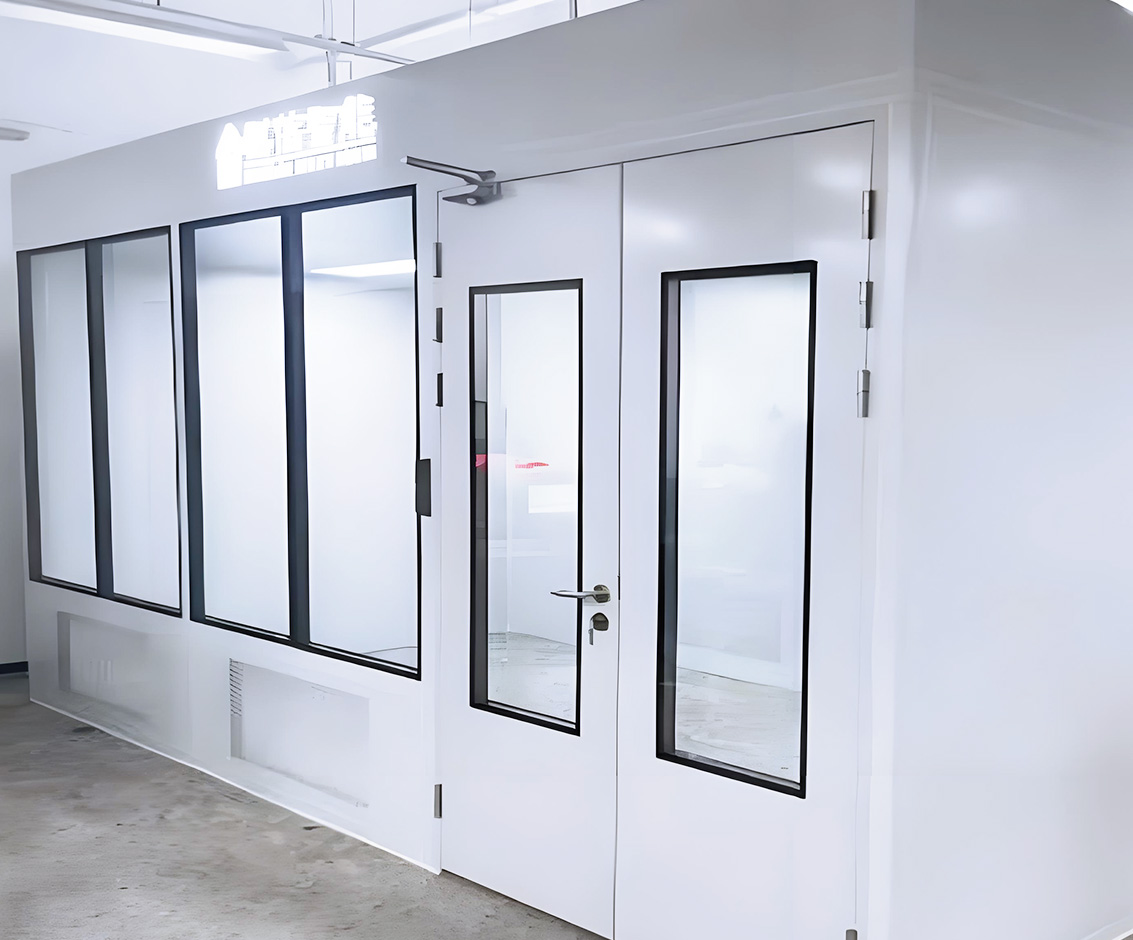
Traditional cleanrooms pose high risks for operational facilities. Builders typically construct them using standard metal studs and gypsum drywall. This legacy approach creates unpredictable contractor timelines. It also generates massive particulate pollution during construction. Furthermore, paper-backed drywall acts as a food source for mold and fungus. These vulnerabilities compromise sensitive manufacturing environments continuously.
Off-site fabrication solves these issues directly. It shifts complex construction into a highly controlled factory environment. Engineers design every component digitally. Factory machines cut and prepare the panels precisely. This eliminates chaotic on-site modifications completely. Contractors simply deliver finished components to your facility for rapid staging.
You must evaluate structural mechanics using three core criteria:
Material Integrity: Premium systems use aluminum honeycomb cores. They feature smooth, non-shedding surfaces. Interlocking panel designs maintain strict pressurization. They eliminate the air sealing vulnerabilities found in standard drywall seams.
Zero-Disruption Assembly: Modern facilities demand continuous operation. "Hook-and-clip" or flush-mount systems allow clean, rapid staging. Installers assemble the panels quickly. This preserves business continuity for adjacent clinical or manufacturing lines.
Maintenance Access: Advanced systems incorporate walk-on ceilings. Technicians perform routine maintenance above the active production zone. This prevents costly production downtime below.
Feature | True Prefabrication | Traditional Stick-Built |
|---|---|---|
On-Site Contamination | Virtually zero. Components arrive pre-cut and sealed. | High. Drywall cutting and sanding release heavy dust. |
Biological Risk | None. Aluminum and steel do not support mold growth. | High. Paper-backed gypsum absorbs moisture and breeds fungi. |
Installation Speed | Extremely fast. Assembles via hook-and-clip systems. | Slow. Requires multiple trades and curing times for mud/paint. |
Best Practice: Always request structural load documentation before specifying walk-on ceilings. Your host facility must support the additional weight load safely.
The functional core of a modular cleanroom depends on the rigidity and pressure requirements of your specific application. No single architecture fits every manufacturing process. You must match the structural category directly to your ISO compliance targets.
Hardwall Systems:
These represent the pinnacle of contamination control. They are required for strict ISO 5–8 environments. Hardwall structures sustain high-volume positive and negative pressure differentials effortlessly. They support fully integrated utilities natively. Engineers flush-mount gas lines, pure water piping, and electrical conduit directly inside the solid wall cavities. This eliminates exposed ledges where dust settles.
Softwall Systems:
These provide a highly cost-effective alternative. They utilize heavy-duty vinyl curtains suspended from robust metal framing. They offer exceptional mobility. Facilities often mount them on casters to roll them over specific equipment. They work best for localized ISO 7–8 zones. They do not hold strict pressure differentials effectively.
Rigidwall Systems:
This category offers a practical hybrid approach. It utilizes transparent acrylic or polycarbonate panels mounted to structural frames. You gain high visual clarity into the process area. It delivers moderate contamination control. You avoid the full capital expenditure associated with a heavy hardwall system. It suits automated packaging or non-sterile device assembly well.
Common Mistake: Buyers often select softwall systems to save upfront capital, only to discover later they cannot meet negative pressure requirements for handling hazardous powders. Always define your pressurization needs first.
A modular system is only as effective as its HVAC and filtration routing. The mechanical walls simply contain the environment. The airflow design actively cleans it. Buyers must choose between two primary airflow designs based on process requirements.
Recirculating systems actively manage and reuse the interior air. High-powered fans push air through ceiling HEPA filters into the room. The air travels downward to the floor. It then enters integrated wall return cavities. These hollow wall panels route the air back up to the ceiling plenum for another cycle.
Outcomes: This design delivers superior temperature and humidity control. It prevents any mixing between cleanroom air and dirty external factory air. Continually cycling the same clean air reduces the particulate load on HEPA filters. This extends filter lifespans significantly and lowers ongoing maintenance costs.
Single-pass systems pull ambient facility air once. They blow filtered air directly into the room. The room then exhausts this air out into the surrounding factory. The air leaves through simple wall gaps or low exhaust grilles. It never returns to the ceiling plenum.
Outcomes: This design offers a much lower upfront capital cost. Installers skip complex return air ductwork completely. It suits environments prioritizing basic particulate control. It works poorly for environments needing strict ambient temperature or humidity control. The HVAC unit must condition raw factory air constantly.
System Type | Temperature Control | Initial CAPEX | HEPA Filter Lifespan |
|---|---|---|---|
Recirculating | Excellent (Highly stable) | Higher (Requires return walls) | Longer (Filters pre-cleaned air) |
Single-Pass | Poor (Depends on host facility) | Lower (Simple exhaust grilles) | Shorter (Filters dirty ambient air) |
What to watch out for: Ensure your host facility has adequate HVAC capacity before selecting a single-pass system. Dumping exhausted cleanroom air into a small warehouse can disrupt the host building's thermal balance.
Initial purchase price (CAPEX) represents only one dimension of a facility upgrade. Modular systems fundamentally alter your long-term balance sheet. CFOs and procurement teams must evaluate the hidden financial leverage these systems provide.
Accelerated tax depreciation offers the most significant financial advantage. The IRS classifies permanent stick-built structures as real property. These depreciate slowly over a standard 39-year schedule. This ties up capital extensively. Conversely, the IRS often classifies modular systems as tangible personal property. You can dismantle and move them. This makes them eligible for a highly advantageous 7-year modified accelerated cost recovery system (MACRS) depreciation cycle. This rapid write-off generates massive near-term tax savings.
Several predictable drivers influence Total Cost of Ownership (TCO):
Single-Source Accountability: Traditional builds require drywallers, painters, HVAC technicians, and electricians. Consolidating design, manufacturing, and installation under one modular vendor eliminates finger-pointing. It stops multi-contractor budget overruns dead in their tracks.
Adaptability and Relocation: Market demands shift rapidly. You can uninstall modular panels safely. You can reconfigure the layout. You can move the entire facility to a new state. You preserve your initial capital investment rather than abandoning it for the landlord.
Speed-to-Market: Traditional builds follow a linear timeline. Modular builds use parallel processing. Site preparation happens simultaneously while the factory fabricates the panels. This cuts construction schedules in half. It drastically reduces the time required to generate operational revenue from new product lines.
Procuring a facility requires careful vendor scrutiny. The lack of standardized terminology in the industry creates dangerous procurement risks. These risks frequently compromise compliance during final certification audits.
Buyers must identify the "fake modular" trap early. Some vendors ship generic, uncut panels to the job site. Installers must perform heavy cutting, drilling, and sanding to fit utilities and doors. This chaotic process reintroduces the exact particulate hazards a modular design is supposed to eliminate. It destroys the core value proposition of prefabrication.
Apply strict shortlisting logic to protect your investment. Follow these best practices:
Demand true prefabrication: Panels should arrive completely pre-fitted. They must arrive pre-cut from the factory. They should feature built-in utility pathways. They require integrated control panel housings. Installers should only need wrenches and hex keys.
Verify certification readiness: Ensure the vendor designs explicitly to third-party testing standards. Ask for documentation proving past compliance with ISO 14644-1:2015, FDA regulations, and GMP guidelines.
Workflow alignment: Map your personnel gowning procedures early. Define your airlocks properly. Establish clear material flows. Poor layout design creates cross-contamination bottlenecks regardless of panel quality.
Common Mistake: Forgetting to account for host facility floor leveling. Even the most precise modular wall panels will fail to seal properly if installed on an uneven warehouse floor. Always conduct a topographical floor survey during the planning phase.
Modular cleanroom systems work by replacing chaotic on-site construction with precise, factory-controlled engineering. They integrate structural integrity, advanced airflow mechanics, and intelligent utility routing seamlessly. This methodology directly supports stringent ISO compliance while maximizing operational agility. Furthermore, it delivers powerful financial advantages through accelerated tax depreciation and asset relocation capabilities.
Project stakeholders must take immediate, structured action. First, map your required ISO classification strictly based on your manufacturing process. Second, define your HVAC needs clearly by choosing between recirculating and single-pass architectures. Finally, consult with specialized modular engineers to conduct a facility audit before committing to any site modifications. Proper early-stage planning guarantees a compliant, cost-effective rollout.
A: Yes. Factory-controlled production of flush panels and integrated filtration often results in more consistent validation for GMP, FDA, and strict ISO 5-8 standards than site-built drywall. The precision manufacturing eliminates the variable quality associated with local contractors.
A: Yes. Hardwall and rigidwall systems use interlocking mechanisms that allow them to be completely dismantled, transported, and reassembled at a new facility with minimal material loss. This protects your initial capital expenditure.
A: While highly variable based on classification and HVAC requirements, material and installation costs typically range between $100 and $1,000+ per square foot. However, TCO calculations must factor in accelerated tax depreciation and reduced operational downtime.


