
English

Views: 135 Author: Site Editor Publish Time: 2026-05-01 Origin: Site
Facility expansions face a severe dual threat in today's demanding industrial landscape. Managers constantly battle spiraling site-labor costs. Unpredictable commissioning delays frequently ruin product launch schedules. Modern contamination control is moving rapidly away from permanent, "stick-built" real estate. Industries now favor precision-engineered, productized assets over messy traditional construction. This shift matters deeply to your bottom line and your regulatory compliance standing.
A modular cleanroom is not just a faster building method. It represents a highly strategic asset decision. It significantly lowers your Total Cost of Ownership. It accelerates complex compliance protocols. It future-proofs your facility operations against changing market demands. You transition from managing an unpredictable construction project to purchasing a predictable, high-performance piece of equipment. In this guide, you will discover the financial leverage behind modular designs. You will learn about their structural superiority and gain a proven framework for planning your next project.
Financial Leverage: Modular systems are classified as tangible equipment, unlocking 7-year accelerated depreciation compared to 39-year timelines for traditional builds.
Risk Mitigation: Factory-controlled fabrication eliminates the bio-hazard risks (like mold growth) associated with traditional construction materials like gypsum.
Operational Agility: Scalable designs allow facilities to upgrade ISO classifications, expand footprints, or relocate entirely without losing their initial capital investment.
Accelerated Deployment: Parallel construction (off-site fabrication + simultaneous site prep) shrinks project timelines by weeks to months.
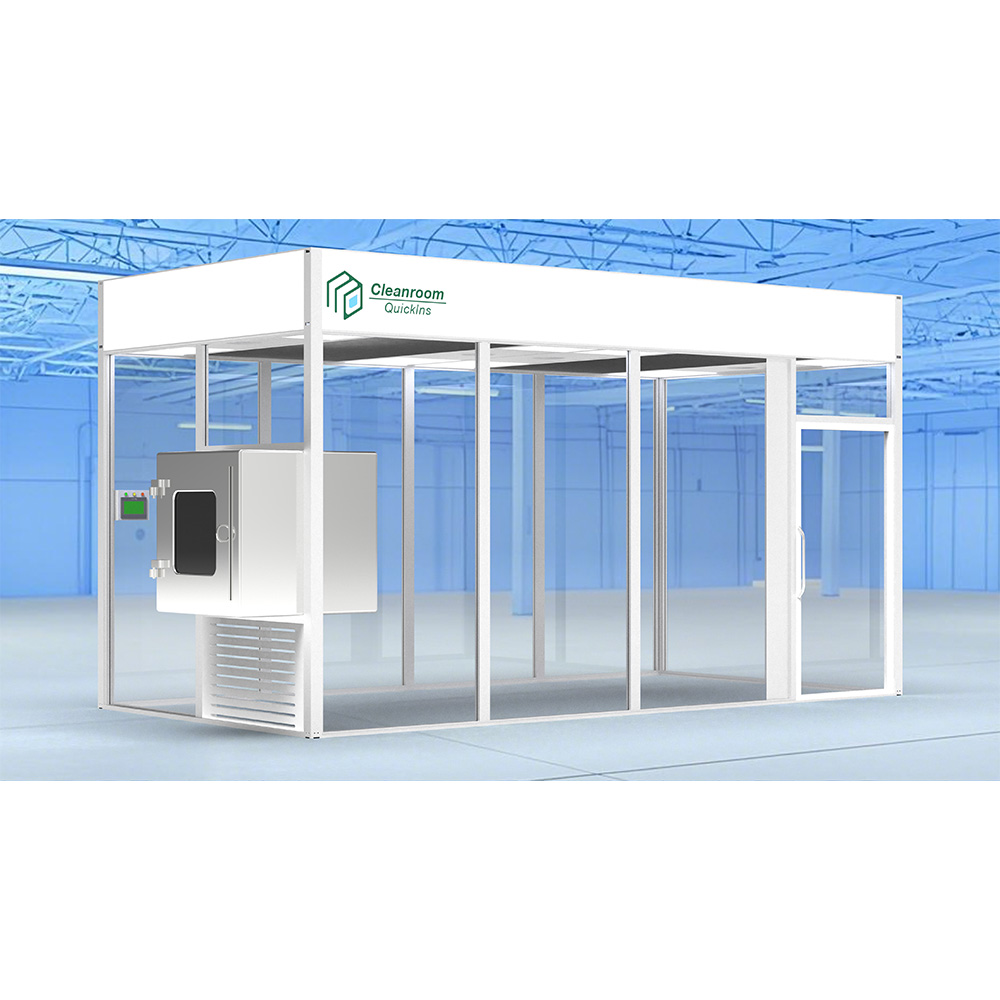
You must understand the fundamental depreciation reality to grasp the true cost of contamination control. The tax classification difference between traditional and modern builds is staggering. Traditional stick-built environments are permanently tied to your host building. The tax code classifies them as real property. This forces a grueling 39-year depreciation schedule. You recover your capital investment at a frustratingly slow pace. Conversely, financial authorities classify a modular cleanroom as tangible capital equipment. This classification unlocks a 7-year accelerated depreciation timeline. You realize massive tax benefits early in the asset's lifecycle. This drastically reduces your true Total Cost of Ownership.
Next, contrast project predictability with variable cost overruns. Stick-built construction relies heavily on site labor. Labor shortages cause severe delays. Daily field adjustments create expensive change orders. These variable costs routinely blow up capital expenditure budgets. Factory manufacturing provides a sharp contrast. It locks in fixed-cost certainty. Factories produce wall systems under strict quality controls. They standardize labor and material pricing. You know exactly what you will spend before production even begins.
Off-site manufacturing also drives major ESG (Environmental, Social, and Governance) improvements. Traditional construction generates enormous amounts of raw material waste. Dumpsters fill up with unusable drywall scraps and excess framing. Precision factory engineering minimizes this waste. Computers optimize panel cuts. You reduce your facility's overall carbon footprint. This directly supports aggressive corporate sustainability targets.
Standard construction materials hide severe compliance risks. Consider the "dirty secret" of traditional stick-built materials. Contractors frequently build standard walls using cellulose-based gypsum boards. These boards are fundamentally incompatible with strict contamination control. Cellulose acts as an abundant food source for microbial life. Research shows cellulose-based gypsum can breed Aspergillus mold at just 30% relative humidity. This bio-hazard risk threatens product integrity. It triggers catastrophic audit failures.
Material superiority is absolutely non-negotiable for critical environments. You need surfaces completely immune to biological degradation. You require non-absorptive, non-shedding, and non-reactive modular components. High-performance panels utilize aluminum honeycomb cores. They feature tough UPVC outer coatings. Many incorporate Rockwool insulation for superior thermal and fire-rated performance. These materials do not harbor moisture. They do not shed particulates into your air stream.
Modern panels also deliver built-in regulatory compliance. They inherently support rigorous ISO 14644-1 standards. For example, traditional walls meet floors at sharp 90-degree angles. Dirt and bacteria accumulate in these tight corners. Prefabricated panels feature integrated 3-inch coving. This creates smooth, seamless transitions for highly effective sterilization. Additionally, air-flushed doors integrate directly into the framework. They maintain rigorous pressure integrity across your entire facility.
The timeline math heavily favors prefabricated solutions. Traditional construction forces a linear schedule. You wait for walls to go up before installing utilities. Prefabrication enables parallel construction. Engineering teams complete 60% to 80% of fabrication off-site. You can pour concrete or upgrade your facility simultaneously. This parallel workflow shrinks project timelines by weeks or months. You reduce operational downtime. You bring products to market much faster.
Integrated utilities add massive value during installation. Standard construction creates chaotic job sites. Plumbers, electricians, and HVAC technicians constantly clash over limited space. Prefabrication solves this logistical nightmare. Factories embed electrical conduits directly into the modular panels. They pre-install medical gas piping. They integrate environmental sensors before shipping. Everything arrives on-site ready to connect.
This integration simplifies the final commissioning phase. Commissioning traditional environments involves endless troubleshooting. You hunt down air leaks in poorly sealed drywall joints. You struggle to balance airflow. Factory-tested panels eliminate these friction points. Engineers validate pressure integrity before the components ever leave the factory. They verify structural tolerances early. This guarantees a smooth final on-site certification phase. Your third-party certifiers encounter fewer surprises.
Free-standing modular structures offer profound structural independence. They do not rely on your existing load-bearing building walls. They operate as self-supported, "plug-and-play" deployment systems. This independence is invaluable for leased spaces or highly constrained warehouses. You do not surrender your capital investment to a landlord. You simply disassemble the components and relocate them when your lease expires.
You can map specific architectural formats directly to your operational needs. The taxonomy of these solutions includes three main categories:
Hardwall: Provides maximum durability and stringency. Perfect for ISO 5 environments. Highly favored in semiconductor manufacturing and sterile pharmaceuticals.
Rigidwall: Uses clear polycarbonate or acrylic panels. Balances high visibility with robust environmental control. Ideal for ISO 5 through ISO 8 applications.
Softwall: Delivers cost-effective, easily deployable boundaries. Uses thick vinyl strips or curtains. Excellent for localized ISO 7 or ISO 8 zones within larger facilities.
The "walkable ceiling" innovation represents another massive operational advantage. Traditional facilities often require costly structural mezzanines to house heavy HVAC equipment. Walkable suspended ceilings eliminate this need. Maintenance personnel walk safely across the top of the ceiling structure. They service HEPA filters and air handling units from above. They never breach the sterile envelope below. Your production batches remain perfectly safe during routine maintenance.
We must objectively evaluate when each method works best. Acknowledge the rare use-cases where traditional stick-built construction still applies. Highly irregular architectural footprints sometimes demand custom stud framing. Extreme structural load-bearing requirements may dictate concrete and heavy steel construction. Additionally, basic non-sterile environments might not justify the investment in pharmaceutical-grade panels.
However, modern prefabrication becomes absolutely non-negotiable under specific criteria. You must choose it when rapid deployment is essential. It wins decisively when you require strict pressure cascade validation. It is mandatory if you anticipate future relocation possibilities. It is the only choice when your processes demand stringent biological and chemical resistance.
Consider the following evaluation chart to guide your facility decisions:
Evaluation Criteria | Traditional Stick-Built | Modular Cleanroom |
|---|---|---|
Tax Depreciation | 39 years (Real Estate) | 7 years (Capital Equipment) |
Construction Speed | Slow, linear process | Fast, parallel off-site fabrication |
Biological Resistance | Poor (Gypsum breeds mold at 30% RH) | Excellent (Non-porous, non-shedding) |
Relocation Ability | Zero (Demolition required) | High (Disassemble and move) |
Commissioning Risk | High variable risk on-site | Low (Factory-tested integrity) |
Planning requires a systematic approach. Follow these five sequential steps to ensure project success. Do not rush the engineering phase. Small miscalculations early on cascade into massive performance failures later.
Step 1: Define Parameters. Establish your exact ISO classification targets. Calculate the necessary Air Changes per Hour (ACH) to maintain those targets. Accurately measure internal equipment heat loads. HVAC sizing completely depends on these initial metrics.
Step 2: Map Airflow & Pressurization. Plot your specific pressure cascades. Decide where you need positive pressure to push contaminants out. Identify where you need negative pressure to keep hazardous materials contained. Plan necessary airlock transitions based on your gowning process flow.
Step 3: Audit Spatial Constraints. Conduct a thorough survey of your existing facility. Measure precise ceiling heights. Locate existing utility tie-ins for water, power, and exhaust. Verify your floor-loading capacities to ensure they support heavy panel structures and walkable ceilings.
Step 4: Design for Tomorrow. Factor in potential future expansions. Standardize panel sizes to allow easy modifications later. Design wide access routes to accommodate bulky equipment swap-outs in the coming years.
Step 5: Partner Early. Emphasize early collaboration. Engage a specialized design-build partner before finalizing your broader facility layout. An experienced engineering team will identify critical airflow clashes and utility blind spots before you issue purchase orders.
Modular design fundamentally changes the contamination control landscape. It transitions sterile environments from unpredictable construction projects into predictable, high-performance equipment purchases. You eliminate the devastating variables of site-labor shortages and material waste. You lock in fixed costs and accelerate your deployment timelines.
Take actionable next steps to secure your facility's future:
Conduct a comprehensive facility audit to document your exact spatial constraints and utility locations.
Download an ISO specifications checklist to clearly define your ACH and particulate limit requirements.
Schedule a design consultation with a specialized engineering team to model your pressure cascades.
Evaluate your corporate tax strategy to leverage the 7-year accelerated depreciation benefits of capital equipment.
A: Yes. Hardwall modular cleanrooms easily meet and sustain ISO 5 standards. By combining stringent architectural seals, appropriate HEPA or ULPA filtration density, and optimized laminar airflow designs, these systems routinely support ISO 5 and even cleaner classifications for critical semiconductor or pharmaceutical operations.
A: Modular panels can be individually removed or replaced if damaged. You unbolt the specific section and swap it out. Traditional walls require invasive, dust-generating demolition involving saws and drywall dust. This demolition compromises the entire sterile barrier and forces massive facility downtime.
A: They offer the physical durability and structural integrity of a permanent building. However, they retain the flexibility of a temporary structure. They can be completely disassembled, reconfigured to larger footprints, or relocated entirely to new leased facilities, making them highly adaptable long-term assets.


