
English

Views: 174 Author: Site Editor Publish Time: 2026-04-25 Origin: Site
Modern manufacturers and researchers face a critical bottleneck today. They must rapidly scale controlled environments without triggering massive facility downtime or spiraling construction costs. Traditional stick-built construction presents a rigid, unpredictable timeline heavily dependent on multiple subcontractors and onsite material fabrication. This legacy process introduces significant risk to project deadlines and facility cleanliness.
Conversely, engineered modular solutions offer a highly predictable, streamlined approach to facility expansion. We must view the modular cleanroom not just as a structural alternative, but as a strategic capital equipment investment. It directly impacts your speed-to-market, ensures continuous regulatory compliance, and guarantees long-term facility flexibility. As production requirements evolve, your infrastructure must adapt seamlessly.
In this comprehensive guide, you will discover the engineering frameworks defining these advanced controlled spaces. We will explore the tangible financial advantages they bring over legacy construction methods. Finally, we provide actionable steps to help you confidently specify the precise architecture your specific industry applications require.
Modular cleanrooms utilize factory-prefabricated panels and components to accelerate on-site installation by up to 50% compared to traditional construction.
From a financial perspective, modular systems are often classified as tangible equipment rather than permanent real estate, offering accelerated tax depreciation benefits.
Replacing traditional ducted HEPA systems with modular negative pressure plenums and Fan Filter Units (FFUs) significantly reduces the long-term cost and complexity of airflow balancing.
Designs range from flexible, tent-like Softwall enclosures to highly rigid Hardwall and Mono-block systems capable of supporting strict cGMP and ISO 3-8 compliance.
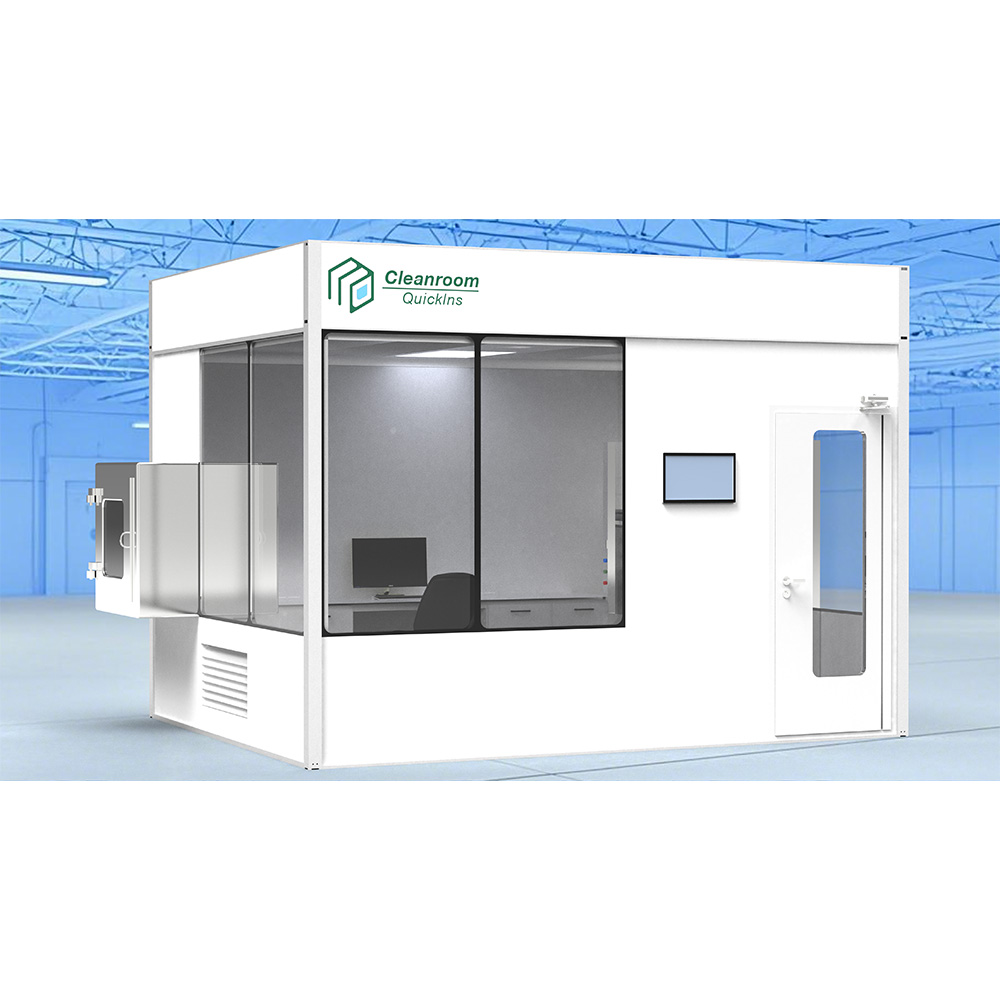
A modular cleanroom is a highly controlled environment engineered utilizing precision-made, factory-prefabricated components. Instead of building walls from raw materials onsite, manufacturers deliver finished components directly to your facility. These critical parts include wall panels, ceiling grids, personnel airlocks, and material pass-throughs. Technicians then assemble them rapidly on-site. This fundamental shift defines the modular advantage.
This method transforms facility expansion from a serial construction model into a parallel design-build approach. Standard construction methods require an architect, a general contractor, and multiple specialized sub-contractors working sequentially. Delays from one trade immediately impact the entire timeline. Modular engineering consolidates this fragmented supply chain. It provides you a single point of accountability. While the vendor manufactures your room off-site, your local team can simultaneously prepare the host facility floor.
The structural backbone of these systems relies on specialized interlocking nodes. Components snap or latch together securely. Manufacturers design these joints utilizing specialized pharmaceutical-grade gaskets to ensure absolute zero-leakage environments. This precise engineering eliminates the dust, debris, and gross contamination inherent to traditional drywall installation. You receive a fully sealed envelope ready for airflow balancing and particulate certification immediately upon assembly.
Evaluating facility expansion requires looking beyond the initial purchase price. Facility directors must analyze the Total Cost of Ownership (TCO) alongside long-term operational Return on Investment (ROI). The most immediate financial advantage lies in minimizing production disruption.
As mentioned, vendors manufacture modular components off-site while your host facility continues normal operations. Standard construction forces a disruptive, sequential timeline onto your active floor plan. Traditional builders bring raw materials, dust-generating saws, and multiple crews into your space. This chaos often forces adjacent production lines to shut down entirely.
Evaluation Metric | Traditional Stick-Built Construction | Engineered Modular Systems |
|---|---|---|
Timeline | Sequential; highly susceptible to delays. | Parallel; components built off-site, saving up to 50% time. |
Maintenance | Requires cutting, patching, and facility shutdowns to repair drywall. | Individual panel nodes can be swapped cleanly without major shutdowns. |
Financial Asset Status | Permanent real estate; standard long-term depreciation. | Tangible equipment asset; frequently qualifies for accelerated depreciation. |
Airflow Balancing | Complex valve tuning; vibration degrades balance over time. | Stable Fan Filter Units (FFUs) utilize negative pressure plenums. |
Maintenance highlights a stark contrast in everyday operational reality. Traditional designs utilize epoxy-painted drywall over steel studs. Repairing a damaged wall requires cutting into the gypsum, patching, sanding, and repainting the surface. This invasive process forces total facility shutdowns to mitigate severe particulate contamination. Modular panels act as independent, swappable nodes. Facility managers can cleanly remove and replace a single damaged panel without halting surrounding operations.
Financial and tax implications heavily favor modular solutions. Tax authorities frequently classify modular systems as tangible equipment or "equipment enclosures" rather than permanent building infrastructure. This classification often qualifies the asset for accelerated tax depreciation under current tax codes. Furthermore, companies can dismantle, relocate, or sell these structures. They retain intrinsic asset value long after the initial project concludes.
Airflow management exposes a hidden maintenance burden within legacy builds. Standard stick-built rooms typically rely on ducted HEPA systems tied to a central air handler. These systems remain highly prone to shifting air volumes because constant duct vibration degrades complex mechanical valve balancing over time. Modular designs solve this headache utilizing negative pressure plenums paired directly with modular Fan Filter Units (FFUs). This pairing provides immense long-term stability. It drastically reduces the recurring cost of third-party airflow balancing.
Selecting the correct physical architecture dictates your future operational capabilities. Manufacturers engineer these spaces into three distinct structural categories. You must align your selection precisely to your compliance goals.
Softwall enclosures represent the most economical entry point into controlled environments. They utilize a tubular steel or aluminum frame draped in heavy-duty vinyl or PVC curtains.
Use Case: These units are ideal for startup operations, e-liquid processing, or temporary ISO 7 and ISO 8 isolation zones. Manufacturers frequently build them on heavy-duty casters to enable rapid relocation across a warehouse floor.
Trade-offs: Softwall systems provide excellent physical dust isolation but remain largely incapable of precise temperature or humidity control. They rely entirely on the ambient climate of the host building. Furthermore, the curtain seams allow minor pressure leakage, making them unsuitable for stringent sterile applications.
Hardwall systems utilize rigid, fully sealed wall panels secured within a robust structural framework. They represent the industry standard for permanent, high-grade controlled environments.
Use Case: Regulatory bodies require hardwall enclosures for stringent ISO 3 through ISO 8 standards. They support rigorous temperature and humidity control, strict pressure cascades, and permanent structural integrity.
Trade-offs: These systems demand a higher initial capital expenditure. However, they deliver vast architectural capabilities. Advanced modular framing can support open-span designs reaching up to 34 feet without requiring disruptive interior support columns. They also integrate securely into existing building utility matrixes.
PODs push the modular concept to its absolute limit. Vendors construct and fully commission these volumetric rooms inside a factory before shipping the entire intact box to your site.
Use Case: PODs offer extreme deployment speed for high-margin pharmaceutical operations. When price is no object and a facility must begin producing life-saving therapeutics immediately, PODs provide the fastest possible site deployment.
Trade-offs: Moving a fully assembled room down a highway incurs massive logistical transportation costs. Additionally, the host facility often requires significant structural slab reinforcement to support the extreme weight of these concentrated loads.
A perfectly engineered space for one industry will fail inspection in another. You must evaluate wall cores, surface finishes, and structural tolerances based on your exact sector requirements. Common mistakes occur when buyers apply generic ISO standards without considering the chemical and physical realities of their daily operations.
Pharmaceutical applications revolve entirely around cGMP compliance and sterility. Facility managers must focus on mitigating bio-burden. You require flush, seamless mono-block panels that eliminate crevices where bacteria can breed. Additionally, the design must incorporate rounded coving at all wall, floor, and ceiling junctions. The most critical requirement involves chemical resistance. Facilities routinely use Vaporized Hydrogen Peroxide (VHP) or harsh bleach solutions for sterilization. You must select uPVC or specialized stainless steel surfaces that withstand aggressive chemical washdowns without blistering or degrading over time.
Microchip fabrication demands specialized material sciences. A single microscopic particle or static discharge will destroy a silicon wafer. You must focus on anti-static, electrostatic dissipative (ESD) surfaces. Furthermore, the internal panel cores must be non-outgassing. Standard adhesives and foams release invisible chemical vapors over time, which ruin sensitive optical coatings. Structurally, the framing must possess the strength to handle high-density bulkheading. You will need to drive massive process pipes and utility penetrations through the walls without compromising the pressurized seal.
Aerospace and medical device manufacturing emphasize mitigating cross-contamination across large-scale physical workflows. Parts are often bulky, and processes require significant human intervention. You must prioritize integrating the modular cleanroom structure directly alongside automated material handling. Best practices include designing the framing to seamlessly enclose Vertical Lift Modules (VLMs) or automated storage retrieval systems. Keeping storage localized inside the clean zone prevents personnel from continuously exiting and re-entering the space, thereby drastically lowering human-shed particulate counts.
Many buyers focus heavily on wall materials while ignoring the aerodynamics driving the environment. The HVAC design and airflow strategy represent the most significant hidden implementation risk. Poor airflow planning leads to failed certifications and exorbitant energy bills.
You must decide how the room handles exhausted air. This decision impacts upfront costs and long-term utility consumption.
System Type | Operational Mechanism | Cost & Compliance Profile |
|---|---|---|
Single-Pass (Non-Recirculating) | Draws ambient air in through ceiling HEPA filters, then exhausts it entirely out the bottom of the walls into the host building. | Cheaper upfront CapEx. Offers very poor temperature and humidity control. High energy burn. |
Recirculating Systems | Utilizes sealed wall cavities to return pre-filtered, climate-controlled air back up to the ceiling plenum for re-filtration. | Higher initial cost. Drastically extends HEPA filter life. Maintains strict thermal and humidity baselines. |
Single-pass systems work well for basic dust isolation in ambient environments. However, if your process requires strict thermal baselines, you must select a recirculating architecture. Reusing already cooled, pre-filtered air eases the load on your chiller plant and prevents early HEPA filter loading.
Facility engineers must evaluate the reality of tying into an existing building's HVAC versus deploying a dedicated, standalone system. Connecting to the host building seems cost-effective initially. However, commercial building systems frequently shut down or reduce power over weekends to save energy. This pressure drop instantly compromises the cleanroom environment. Deploying a dedicated system utilizing standalone mini-splits or dedicated chillers ensures 24/7 compliance independent of the host facility.
Real estate limits growth. Engineered modular systems offer a profound structural capability: they can be erected on load-bearing mezzanines. By utilizing heavy-duty steel superstructures, you can build your controlled environment above existing warehouse operations. This effectively doubles your production footprint without requiring a costly new building lease or pouring a new concrete footprint.
Procuring a precision environment requires a methodical, data-driven approach. Do not approach vendors simply asking for a "cleanroom." You must define the operational physics first.
Baseline the Compliance Need: Map your exact regulatory requirement to physical mechanical metrics. If you need ISO 14644 Class 7 or USP 797 compliance, translate that into required Air Changes Per Hour (ACH). Determine the necessary ceiling filter coverage percentage. An ISO 8 space might require 15% HEPA coverage, while an ISO 5 space demands up to 70% coverage to maintain laminar flow.
Material and Core Selection: Vet your panel materials strictly against your daily operations. Evaluate Fiberglass Reinforced Plastic (FRP), melamine, stainless steel, and polycarbonate. Choose based on chemical resistance and fire ratings. If your facility requires high-visibility supervisory needs to monitor staff without gowning up, integrate PETg transparent panels into the sightlines.
Vendor Vetting: Define stringent criteria for shortlisting manufacturers. Look for engineering firms offering both standard SKU kits and deep architectural customization. Standard kits allow rapid deployment of basic ISO 8 packing rooms. Deep customization capabilities prove the vendor can engineer complex, non-outgassing environments when your future product lines demand tighter tolerances.
A modular cleanroom never represents a compromise on quality or durability. It stands as an engineered, technological upgrade over legacy traditional construction. By shifting to a prefabricated design-build model, you purchase absolute timeline predictability. You secure rigorous compliance continuity and guarantee future-proof facility flexibility. As your product lines evolve, your facility can adapt, expand, or relocate without losing its capital value.
Your immediate next step requires precise documentation. Conduct a comprehensive internal site audit. Define your precise ISO, USP, or cGMP requirements alongside your specialized chemical washdown procedures. Finally, engage a dedicated design-build modular vendor to develop a preliminary airflow model and panel specification layout. This proactive engineering approach guarantees your final installation will pass certification on day one.
A: Costs vary massively based on the required ISO classification, HVAC complexity, and chosen wall materials. A basic ISO 8 softwall enclosure might cost under $100 per square foot. However, a highly regulated ISO 4 semiconductor space or a cGMP pharmaceutical suite requiring specialized chillers and stainless steel mono-block panels can exceed $1,000 per square foot. Accurate quotes require comprehensive engineering specifications.
A: Yes. Because manufacturers fabricate the modular components in a factory simultaneously while your host facility prepares the site floor, the parallel construction timeline yields dramatic efficiency. This dual-track approach typically reduces overall project timelines by up to 50% compared to sequential stick-built construction.
A: Absolutely. The interlocking structural nodes allow technicians to cleanly unlatch, reconfigure, or expand the footprint. You can even completely dismantle the entire structure and relocate it to a new geographical facility. This flexibility provides massive ROI, as the room acts as a mobile asset rather than a sunk real estate cost.
A: Modular systems utilize localized Fan Filter Units (FFUs) integrated into a negative pressure ceiling plenum. This setup standardizes the airflow across the entire ceiling grid. It completely bypasses the complex, valve-tuning nightmares associated with traditional ducted systems, which constantly fall out of balance due to localized duct vibration.


