English

Views: 0 Author: Site Editor Publish Time: 2026-09-12 Origin: Site
Material specification in hygienic environments carries massive stakes. Microscopic particulate infiltration or thermal bridging can compromise entire production batches in pharmaceutical, chemical processing, or food manufacturing facilities. Facility managers constantly face the tension between achieving maximum thermal efficiency and maintaining strict, verifiable sanitation standards like ISO cleanroom classifications and FDA compliance. You need insulation that performs structurally without harboring pathogens. This brings us to the double notch joint design in PIR (Polyisocyanurate) panels. It serves as a specific structural solution for high-grade facilities. We will objectively evaluate whether this joint configuration meets the stringent airtightness, vapor control, and hygiene requirements of modern clean areas. We will look at the mechanics of the joint, material properties, and installation realities from the field to determine if this system holds up under rigorous industrial demands.
Airtightness & Contamination Control: The labyrinth-style joint of a double notch PIR panel significantly reduces air leakage compared to standard joints, acting as an integrated vapor barrier making it highly viable for controlled environments.
Thermal Integrity & U-Values: Polyisocyanurate cores offer superior thermal resistance (exceptionally low U-values), eliminating cold bridging and minimizing condensation risks that lead to microbial growth in washdown areas.
Installation Dependency: The hygienic performance of these panels relies heavily on precision sizing, cutting, and the correct application of FDA-approved, cleanroom-grade sealants at the panel joints.
Regulatory Compliance: When paired with appropriate steel or FRP (Fiberglass Reinforced Plastic) facings, double notch PIR panels can meet strict B1 fire ratings and ISO cleanroom standards across diverse industrial applications.
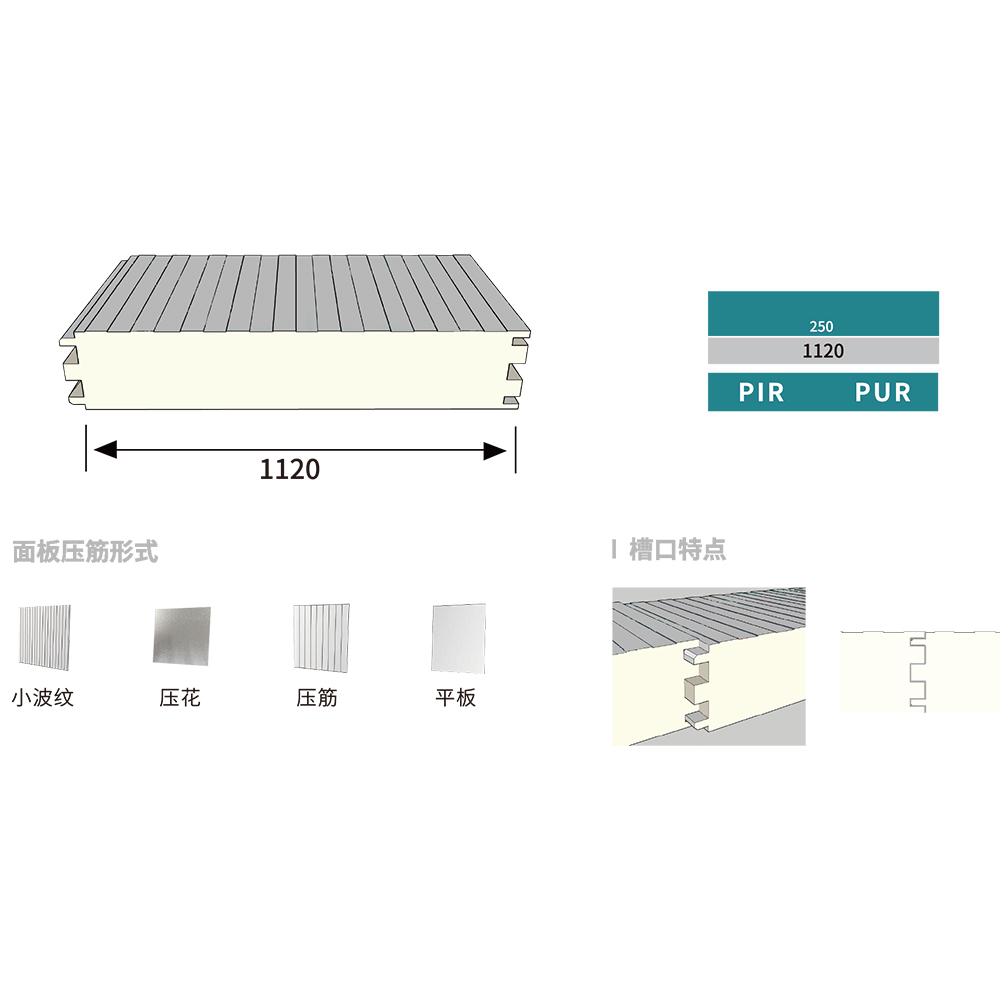
The double notch joint features a complex labyrinth geometry. When you look at a cross-section, you see two distinct interlocking grooves and protrusions. Standard tongue-and-groove systems offer a simple linear path where two flat edges meet. Cam-lock systems pull panels together mechanically but often leave microscopic gaps if the internal hooks do not align perfectly. The double notch interlocking mechanism changes this dynamic completely. It creates a tortuous path for air and moisture. Airflow cannot easily navigate this complex route because it has to change direction multiple times to breach the barrier. This geometry inherently improves the baseline seal before you even apply caulking. It acts as a robust defense against cold bridging. Heat transfer stops dead at the joint interface because the interlocking foam blocks the direct line of sight from the warm side to the cold side. The interlocking design ensures tight physical mating between panels. This structural alignment prevents shifting under environmental stress, such as building settlement or heavy wind loads on exterior walls.
Increased surface area for sealant adhesion inside the joint cavity.
Mechanical self-alignment during the installation process.
Elimination of direct thermal pathways through the panel seam.
Enhanced shear strength across the entire wall assembly.
Polyisocyanurate offers exceptional objective material properties for industrial construction. It features a highly rigid closed-cell structure. During the manufacturing process, the foam expands and cures into millions of tiny, independent bubbles. Compressive strength remains remarkably high under load, allowing these panels to support significant weight. Thermal conductivity stays incredibly low across extreme temperature ranges. You achieve highly efficient U-values for your facility without needing excessively thick walls. Closed-cell insulation is mandatory for these specific environments. Moisture ingress causes catastrophic panel failure over time in lesser materials. Vapor transmission degrades thermal performance rapidly when water replaces the insulating gas inside the cells. PIR prevents these primary failure modes effectively. The cellular structure blocks water absorption naturally. This keeps the internal core dry and structurally sound. You maintain consistent thermal resistance year after year.
Material Property | Typical PIR Core Value | Industrial Benefit |
|---|---|---|
Density | 40-42 kg/m³ | Optimal balance of weight and structural rigidity. |
Compressive Strength | >100 kPa | Supports walk-on ceilings and heavy equipment loads. |
Thermal Conductivity | 0.020 - 0.022 W/m·K | Maximizes energy efficiency in cold storage zones. |
Closed Cell Content | >95% | Prevents moisture absorption and vapor transmission. |
Pharmaceutical and biotechnology facilities require strict environmental control. Food processing plants follow similar rigorous mandates to prevent contamination. You typically target ISO Class 5 to ISO 8 classifications depending on the specific manufacturing process. Wall and ceiling panels must perform flawlessly here. They must never shed particles into the sterile room. They must block external particulate ingress completely. The panel joints must remain hermetically sealed. Any breach introduces airborne contaminants immediately, which HVAC filters then have to work overtime to clear. Facility managers monitor particle counts continuously using laser counters. Failing these standards forces immediate production shutdowns and extensive cleaning protocols. Your panel choice dictates long-term compliance success. If the walls generate dust, the room fails.
Condensation prevention is critical for hygienic environments. Thermal bridging drops interior surface temperatures rapidly at the panel seams. Cold spots invite immediate surface condensation formation when warm, humid air hits the cold metal. Moisture accumulation leads directly to bacterial proliferation. Fungal growth follows shortly after moisture appears, creating a massive health hazard in food and pharma plants. You must establish continuous, unbroken thermal barriers. Integrated vapor barriers are non-negotiable for success. Temperature-controlled zones demand unbroken insulation lines from the floor to the ceiling. The double notch design eliminates direct thermal pathways. This keeps internal surfaces above the dew point at all times. You prevent the moisture conditions bacteria need to survive.
Washdown compatibility matters daily in hygienic facilities. Cleanroom operators execute aggressive cleaning regimens constantly to maintain sterility. Vaporized hydrogen peroxide (VHP) decontaminates surfaces thoroughly but attacks weak plastics and exposed foams. High-pressure washdowns remove stubborn organic debris from meat and dairy processing lines. High-temperature water sanitizes the entire processing environment. Panels must withstand these harsh chemical exposures repeatedly without degrading. The core insulation must survive if the facing suffers minor mechanical damage from a forklift or cart. The joint sealants must resist chemical degradation from peracetic acid and sodium hypochlorite. Facilities cannot afford panels degrading from standard cleaning protocols. Chemical resistance ensures a long operational lifespan and prevents the walls from becoming a contamination source.
Cleanrooms operate under strict positive or negative pressure differentials. Positive pressure keeps contaminants out, while negative pressure keeps hazardous materials contained. The double notch design resists these continuous aerodynamic forces. It prevents air leakage under constant environmental stress. You integrate this joint design with cleanroom-grade silicone during assembly. Polyurethane sealants also work exceptionally well here depending on the chemical exposure. This combination creates a seamless, monolithic surface. You achieve a truly airtight PIR sandwich panel installation. The labyrinth joint holds the sealant securely in place within the groove. Pressure fluctuations cannot blow the sealant out of the seam. This ensures long-term integrity for the cleanroom envelope, reducing the load on your air handling units.
Surface facings dictate your ultimate hygienic compliance. The PIR core handles thermal and structural duties. The notch design provides joint integrity. The exterior facing interacts directly with the cleanroom environment. Smooth polyester-coated galvanized steel works for general applications and dry packaging areas. Stainless steel (304/316L) resists harsh corrosive chemicals perfectly and is the standard for wet processing. Antimicrobial PVC films offer active bacterial resistance for high-risk zones. You must select the facing based on your specific cleaning regimen. The facing material must not pit, rust, or degrade over time. Smooth surfaces prevent bacteria from finding microscopic hiding spots.
Facing Material | Chemical Resistance | Impact Resistance | Best Application |
|---|---|---|---|
Polyester-Coated Steel | Moderate | High | General ISO 7/8 Cleanrooms |
304/316L Stainless Steel | Excellent | Very High | Washdown & VHP Environments |
Antimicrobial PVC Film | High | Moderate | High-Risk Biological Zones |
Walk-on ceilings provide massive operational benefits for facilities. PIR cores possess exceptionally high compressive strength compared to standard foams. You can utilize double notch panels as structural walk-on ceilings. Maintenance personnel walk safely above the active cleanroom on the interstitial floor. They service HVAC systems without entering the sterile zone. They replace HEPA filtration units easily from above. They never breach the sterile environment below during routine maintenance. This eliminates costly cleanroom downtime for simple repairs and filter swaps. The interlocking double notch distributes weight loads evenly across multiple panels. This prevents panel deflection under human foot traffic and keeps the ceiling grid perfectly level.
Fire performance ensures strict regulatory compliance and life safety. PIR offers excellent fire-retardant properties for industrial use. It achieves a strict B1 fire rating easily under standard testing protocols. Older PUR (Polyurethane) panels melt quickly during fires, dripping burning plastic and spreading flames. PIR chars and maintains structural stability longer, creating a protective carbon layer. Large-scale industrial cleanrooms require this vital protection to secure building permits. Refineries and chemical plants demand strict insurance compliance. FM approval often dictates your material selection process for large builds. Double notch PIR panels meet these stringent safety requirements. They protect both personnel and expensive processing equipment from rapid fire spread.
Expanded Polystyrene (EPS) offers basic, entry-level insulation for standard warehouses. PIR delivers vastly superior thermal efficiency for controlled environments. PIR achieves much lower U-values at thinner profiles, saving valuable floor space. Structural rigidity heavily favors the PIR core, allowing for longer panel spans without secondary steel supports. EPS absorbs moisture in heavy washdown environments if the facing is breached. PIR features extremely low moisture absorption rates due to its closed-cell matrix. PIR provides vastly superior fire performance compared to EPS. EPS melts and spreads fire rapidly, creating a severe hazard. PIR chars and slows flame spread. Hygienic facilities should avoid EPS for critical clean areas. The performance gap is simply too wide to justify the risk.
Mineral wool offers excellent non-combustible fire ratings. It excels in extreme heat environments like bakeries or industrial ovens. However, it poses severe particulate shedding risks in cleanrooms. Compromised panel seals release dangerous microscopic fibers into the air stream. Strict hygienic areas generally reject mineral wool cores for this exact reason. PIR remains the preferred choice for cleanrooms and sterile labs. The closed-cell PIR core sheds zero particles, even if exposed during modifications. The non-fibrous nature protects the sensitive cleanroom environment from foreign object debris. You trade absolute fireproof status for absolute particulate control. In pharmaceutical and food applications, particulate control wins every time.
Analyze the cost-to-performance ratio carefully when planning your facility. Upfront material costs for PIR are higher than basic EPS panels. Installation requires specialized precision and experienced labor to align the notches correctly. However, long-term operational savings are substantial. HVAC energy consumption drops significantly due to better U-values and reduced air leakage. Contamination events become rare occurrences, saving entire batches of product from the incinerator. Facility design must prioritize these lifecycle benefits over initial material savings. Cheaper panels lead to higher energy bills and constant maintenance. Poor joints lead to rejected production batches. The initial investment in double notch PIR pays off quickly. You secure a reliable, hygienic operational environment for decades.
Precision installation is mandatory for success. Structural misalignment ruins the entire project. Poor alignment negates the airtight benefits completely, leaving gaps for air and moisture. The double notch fails if not seated properly into the adjacent panel. You must utilize laser alignment tools during construction to keep the wall perfectly plumb. Specialized lifting equipment prevents accidental panel damage during rigging. Experienced cleanroom contractors ensure proper execution of the joint assembly. You cannot rush the installation process. Every joint must interlock perfectly before securing the panel to the steel framework. Tolerance for error is practically zero in cleanroom builds. Proper execution guarantees the designed thermal performance.
Verify the floor track is perfectly level using laser transit tools.
Apply a continuous bead of cleanroom-grade sealant into the female notch.
Rig the panel using vacuum lifters to prevent facing damage.
Guide the male edge into the female notch, ensuring full depth engagement.
Secure the panel to the structural steel using concealed fasteners.
Sealant application represents a critical failure point in any cleanroom build. Improper sealant application destroys hygienic integrity instantly. Panel joints require flawless, continuous execution without any gaps or bubbles. Floor and ceiling intersections demand equal care to prevent moisture pooling. You must install flush, radius coving at all corners. Coving eliminates sharp 90-degree angles entirely. Bacteria harbor easily in tight, square corners where mops cannot reach. Smooth transitions prevent microbial buildup effectively. Cleaners can wipe radius coving easily during daily sanitation routines. You must use FDA-approved, mold-resistant sealants for all exposed joints. Inspect all seams meticulously before commissioning the room.
Managing penetrations requires strict protocols on the job site. You must size and cut panels on-site occasionally to accommodate field conditions. HVAC ducts require precise structural openings. HEPA filters need exact framing dimensions to maintain the ceiling seal. Utility penetrations breach the panel surface inevitably for electrical and plumbing lines. You must cut PIR the correct way using fine-toothed track saws. Improper cutting fractures the rigid internal core and leaves jagged edges. You must seal all cut edges immediately with aluminum tape or specialized channels. This maintains the integrity of the cold storage insulation panel. Exposed cores absorb moisture and degrade quickly. Use specialized collars for all pipe penetrations to ensure a hermetic seal.
Double notch PIR panels excel in hygienic clean areas and cold storage environments. You must specify them with correct smooth facings and install them with rigorous sealing protocols. They provide an ideal balance of high thermal efficiency, structural rigidity, and stringent airtightness. Pharmaceutical compounding, meat processing, biotechnology labs, and chemical cleanrooms benefit immensely from this architecture. The labyrinth joint provides a mechanical advantage that standard panels simply cannot match. Follow these actionable steps to ensure project success:
Review technical data sheets to verify the specific U-values meet your HVAC design requirements.
Request facing material samples to conduct physical chemical compatibility testing with your cleaning agents.
Consult a cleanroom structural engineer to confirm the Double Notch PIR Panel configuration satisfies your target ISO classification.
Hire only certified cleanroom contractors experienced in precision laser alignment and hygienic sealant application.
A: The double notch features a labyrinth geometry that increases the distance air and moisture must travel. This complex path improves the baseline seal significantly. It acts as an integrated vapor barrier. It also eliminates direct cold bridging, whereas standard tongue-and-groove joints offer a simpler, less secure linear path.
A: Yes, provided the panel facing is strictly non-shedding. You must use materials like stainless steel or smooth coated steel. Furthermore, all joints must be hermetically sealed with cleanroom-approved silicone to prevent any particulate ingress or air leakage.
A: The interlocking notch eliminates direct thermal bridging through the joint interface. This keeps the internal surface temperature consistently above the dew point. By maintaining optimal U-values and preventing cold spots, it stops moisture from condensing on the cleanroom walls.
A: The closed-cell PIR core itself does not support microbial growth. However, the overall hygienic performance relies entirely on the integrity of the surface facing and the joint sealants. Smooth facings and proper coving prevent bacteria from finding places to harbor.
A: They typically achieve a standard B1 flame retardant classification. Unlike EPS which melts rapidly, PIR chars when exposed to fire. This charring effect offers much better structural stability during a fire event, protecting personnel and equipment.
A: In most cleanroom applications, they do not. The closed-cell core combined with the labyrinth joint and impermeable steel facings acts as a complete, integrated vapor barrier. This holds true provided all joints are properly and continuously sealed.
A: You use continuous, mold-resistant, FDA-approved elastomeric sealants. These are applied directly to the panel seams to create a monolithic surface. This sealing process is often paired with flush hygienic coving at all corners to eliminate 90-degree angles.