English

Views: 0 Author: Site Editor Publish Time: 2026-09-10 Origin: Site
High-humidity cleanroom environments expose structural materials to constant moisture stress. Pharmaceutical wash-down areas, biotech facilities, and specific electronics manufacturing zones face daily humidity challenges. This moisture threatens regulatory compliance and operational continuity. Traditional cleanroom wall systems are highly susceptible to moisture ingress. Standard EPS or Rockwool cores absorb water over time. This absorption leads to core degradation, panel delamination, mold proliferation, and unacceptable particulate shedding.
Facility engineers need better solutions to meet stringent ISO and GMP standards without sacrificing structural integrity or fire safety. The Hollow MgO Sandwich Panel offers a proven alternative. This guide evaluates the technical viability, implementation risks, and lifecycle value of hollow magnesium oxide systems for critical environments.
Superior Moisture Resilience: Hollow MgO panels resist water absorption and swelling, preventing the internal rot and delamination common in traditional fibrous or foam-core panels.
Utility Integration & Thermal Dynamics: The hollow core structure reduces overall dead load, provides natural raceways for electrical conduits and cleanroom gas lines, and acts as a thermal break to stabilize room temperatures.
Uncompromised Fire Safety: Magnesium oxide is naturally non-combustible, offering Class A fire ratings without the moisture-retention drawbacks of mineral wool.
Quality Control Imperative: Procurement must strictly evaluate MgO curing processes to avoid "chloride leaching" (sweating), a known risk in low-grade magnesium oxide wall panel manufacturing.
Lifecycle Sustainability: MgO production carries a significantly lower carbon footprint compared to Portland cement or petroleum-based foam panels, supporting facility ESG goals.
Fibrous cores like Rockwool and Glasswool act as massive sponges in high-humidity environments. Moisture vapor penetrates microscopic gaps in panel joints over months of operation. Once inside, the fibrous material absorbs the water through capillary action. This moisture retention destroys the panel's insulating value. Wet mineral wool becomes heavy and slumps inside the steel casing. This slumping creates hollow voids at the top of the wall, compromising both thermal insulation and structural rigidity. The trapped moisture also creates a breeding ground for hidden microbial growth, which can eventually bypass the panel seams and contaminate the clean space.
Foam cores face different but equally severe failure modes. Expanded Polystyrene (EPS) and Polyurethane (PU) panels resist water better than Rockwool. However, they degrade rapidly under harsh chemical exposure. Cleanrooms require frequent decontamination. Vaporized hydrogen peroxide (VHP) and sodium hypochlorite wash-downs are standard protocols. Repeated chemical exposure causes foam cores to outgas and shrink. This outgassing breaks down the internal polyurethane adhesives. The steel facings eventually delaminate from the foam core. The wall loses its structural integrity, bulges under HVAC pressure differentials, and begins to shed particulates into the cleanroom.
Engineers must establish strict technical requirements for a moisture resistant cleanroom panel before specification. We evaluate these systems based on specific performance metrics:
Zero Capillary Action: The core material must not draw water upward from floor-level spills or wash-downs.
Biological Resistance: Inorganic materials are mandatory to eliminate food sources for mold spores and bacterial colonies.
Dimensional Stability: The panel cannot expand, contract, or warp under rapid temperature and humidity fluctuations during sterilization cycles.
Chemical Inertness: The core and adhesives must withstand prolonged exposure to VHP and quaternary ammonium compounds without degrading.
Seamless Integration: The system must support flush transitions and accept cleanroom-grade silicone to prevent moisture from bypassing the envelope.
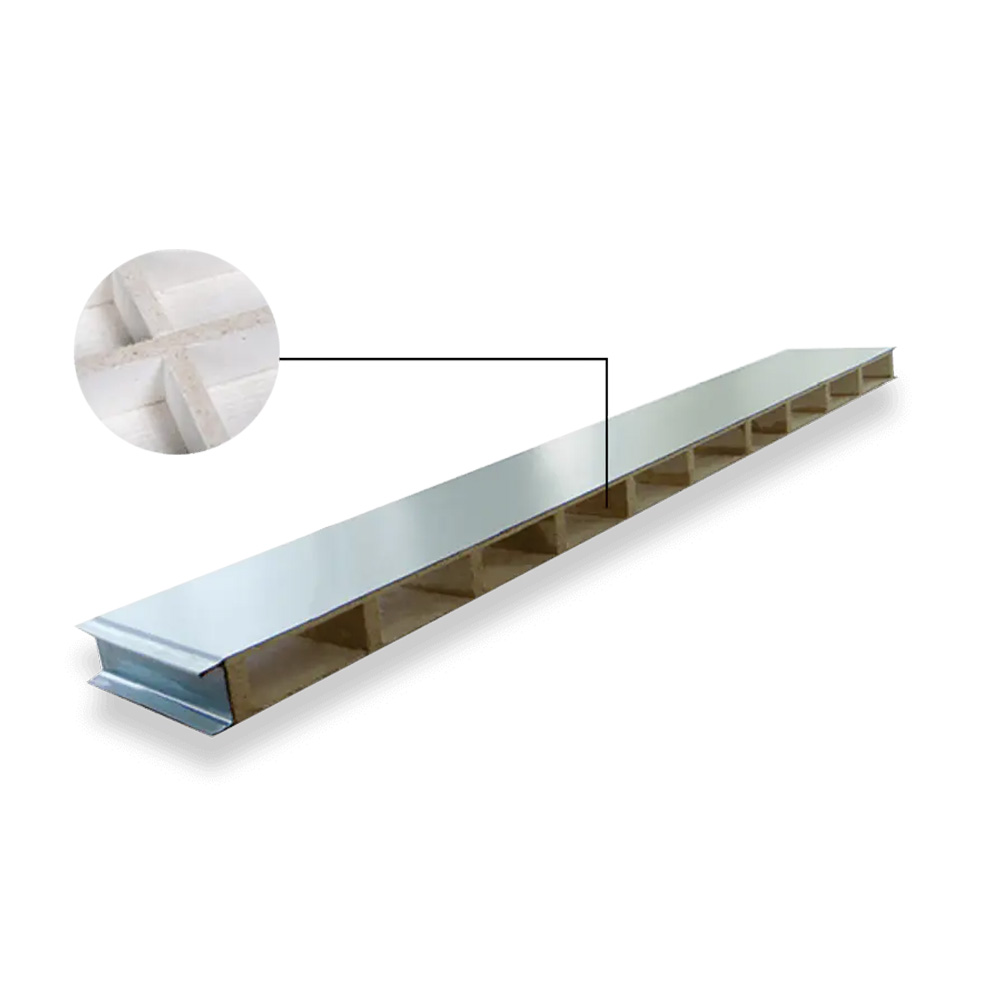
A hollow magnesium oxide panel consists of multiple engineered layers designed for maximum durability. The exterior facings utilize 0.5mm to 0.8mm galvanized steel or aluminum. These metals receive specialized cleanroom coatings like PVDF (Polyvinylidene Fluoride) or anti-static PVC films. High-strength, two-component polyurethane or epoxy adhesives bond the metal to the core under immense pressure. The core substrate is a rigid magnesium oxide wall panel. Magnesium Oxide (MgO) is a naturally occurring inorganic mineral. It possesses exceptional chemical stability. MgO does not contain cellulose, wood fiber, or organic matter. This inherent composition provides absolute resistance to biological growth and moisture degradation.
Solid MgO panels are incredibly heavy, often exceeding 25 kg/m². This weight complicates installation, increases shipping loads, and limits ceiling applications. The hollow core design solves this structural challenge. Manufacturers engineer the MgO board with internal vertical voids, typically 30mm to 40mm wide. The remaining solid webs act as miniature I-beams inside the panel. This geometry provides exceptional bending stiffness while removing significant mass. The weight-to-strength ratio improves dramatically, dropping the panel weight to a more manageable 16 to 18 kg/m².
The hollow cavities offer a major operational benefit for facility teams. We use these internal voids for hidden utility routing. Electricians can drop wiring conduits directly through the panel from the ceiling space. Plumbers can route small cleanroom gas lines or compressed air tubes internally. This eliminates the need for surface-mounted raceways. Surface raceways collect dust, disrupt laminar airflow, and complicate cleaning protocols. Routing utilities inside the hollow core maintains a perfectly flush cleanroom envelope.
Temperature control is critical in GMP environments, where fluctuations can ruin sensitive batches. The hollow MgO panel provides unique thermal dynamics. The trapped air within the hollow cavities functions as a natural thermal break. Air is a poor conductor of heat. These internal air pockets slow thermal transfer across the wall assembly. This contributes positively to the panel's overall U-value. The thermal break helps HVAC systems maintain strict temperature controls in critical manufacturing zones, reducing the energy load required to cool or heat the space.
Hollow MgO panels excel in continuous high-RH environments. Wet benches, pharmaceutical wash-down rooms, and BSL-3/4 facilities require absolute moisture defense. The inorganic MgO core does not absorb ambient humidity. It maintains its structural rigidity even when fully submerged in water during rigorous testing protocols. The hollow design also aids in preventing micro-condensation. The internal air cavities allow the panel to equalize temperature gradients more effectively than solid mass panels. This reduces the risk of dew point condensation forming within the panel core, a common issue in facilities with extreme temperature differentials between rooms.
Magnesium oxide offers exceptional thermal resistance. It is a naturally refractory material used in industrial furnaces. Hollow MgO panels easily comply with strict international fire codes, including ASTM E84 and EN 13501-1. They achieve a Class A1 non-combustible rating. During a fire event, MgO does not produce toxic smoke, outgas hazardous chemicals, or create flaming droplets. The material actually releases chemically bound water when exposed to extreme heat. This endothermic reaction actively cools the panel surface and delays fire propagation, providing critical evacuation time for facility personnel.
Cleanroom walls endure constant physical abuse. Stainless steel carts, equipment transfers, and personnel traffic cause frequent impacts. The rigid MgO substrate absorbs and deflects these impacts without denting the steel facing. The hollow web structure reinforces the steel against localized crushing. This rigidity makes hollow MgO highly suitable for walkable cleanroom ceilings. Maintenance personnel can safely walk across suspended MgO ceiling panels to service HVAC HEPA filters and lighting fixtures. Proper structural suspension systems—such as heavy-duty aluminum T-grids—are required, but the panel itself easily supports human point loads exceeding 150 kg/m².
Particulate shedding ruins cleanroom classifications. The hollow MgO panel prevents contamination through its sealed construction. The surface facings dictate the chemical resistance. Anti-static coatings prevent dust adhesion in semiconductor manufacturing. PVC films offer superior resistance to VHP in pharmaceutical spaces. PVDF coatings provide maximum defense against harsh acidic wash-downs. When properly sealed with cleanroom mastic, these panels maintain ISO Class 4 through ISO Class 8 environments. The inorganic core ensures zero particulate shedding even if the surface facing is accidentally scratched by equipment.
Sensitive manufacturing equipment requires vibration control. High-precision photolithography or electron microscopy cannot tolerate structural vibrations. Hollow MgO panels provide excellent acoustic and vibrational dampening. The dense MgO material blocks low-frequency sound transmission from mechanical rooms. The internal air gaps disrupt high-frequency sound waves. This combination yields a high Sound Transmission Class (STC) rating, typically exceeding STC 30. The rigid board and air gap mitigate noise transfer, creating a stable, quiet environment for both sensitive equipment and cleanroom operators.
Facility managers often weigh MgO against traditional Rockwool. Rockwool typically wins in pure acoustic insulation and thermal resistance. The dense mineral fibers trap heat and sound effectively. However, Rockwool fails completely in moisture resistance. Hollow MgO wins decisively in high-humidity applications. The operational security against water damage justifies specifying MgO in wash-down zones. MgO eliminates the risk of hidden mold growth that plagues wet Rockwool installations, ensuring long-term GMP compliance.
Aluminum honeycomb panels represent the premium tier of cleanroom construction. They are exceptionally lightweight, completely non-combustible, and offer excellent rigidity. However, they carry a significant upfront premium. A hollow MgO sandwich panel offers a highly effective alternative. It provides the same high rigidity and Class A1 fire resistance at a more accessible threshold. The primary trade-off is weight. Hollow MgO is heavier than aluminum honeycomb. Installation teams require more effort and mechanical assistance to maneuver MgO panels into place.
Procurement teams must look beyond the initial material acquisition. Hollow MgO panels offer substantial lifecycle value. Their moisture resistance drastically reduces replacement frequency. Facilities avoid costly production shutdowns required to replace rotting wall sections. The integrated utility routing saves significant electrical labor during the construction phase. Furthermore, MgO supports facility ESG (Environmental, Social, and Governance) goals. Producing magnesium oxide requires significantly less energy than manufacturing Portland cement. MgO cures at room temperature, whereas cement requires kilns firing at 1400°C. This lower carbon footprint aids in achieving green building certifications like LEED.
Panel Type | Moisture Resistance | Fire Rating | Weight Profile | Utility Routing |
|---|---|---|---|---|
Hollow MgO | Excellent (No capillary action) | Class A1 (Non-combustible) | Moderate to Heavy | Internal voids available |
Rockwool | Poor (Absorbs water) | Class A1 (Non-combustible) | Moderate | Surface mounted only |
Aluminum Honeycomb | Excellent (Waterproof core) | Class A1 (Non-combustible) | Very Light | Surface mounted only |
EPS Foam | Moderate (Degrades with chemicals) | Combustible (Melts/Burns) | Light | Surface mounted only |
Contractors must prepare for the physical reality of MgO. Even with the hollow core design, these panels are heavier than EPS or PU alternatives. Manual lifting becomes fatiguing for large wall sections, increasing the risk of dropping and damaging the panels. Ceiling installations present specific logistical challenges. Contractors must utilize proper lifting equipment, such as vacuum suction lifters or mechanical scissor hoists. Structural engineers must calculate the dead load of the MgO panels accurately. The facility's primary steel structure must support the suspended ceiling weight safely without deflection.
A cleanroom is only as strong as its weakest penetration. Integrating accessories into a hollow core system requires precision engineering. Flush-mounted cleanroom doors, double-glazed windows, and HVAC return air grilles must anchor securely. Installers cannot simply drive screws into the hollow voids; the fasteners will strip out. They must align heavy accessories with the solid internal webs of the MgO board. Alternatively, manufacturers can insert solid blocking at designated window and door cutouts during fabrication. This ensures structural integrity without compromising the flush finish required for easy wipe-downs.
The panel joints represent the highest risk for moisture bypass. Hollow MgO panels typically utilize a tongue-and-groove edge or a male/female aluminum profile connection. Both designs require meticulous sealing. Installers must apply cleanroom-grade, mold-resistant silicone sealants at every seam. The sealant must fill the joint completely to prevent vapor transmission. Poorly sealed joints allow wash-down water to reach the internal panel cavities. While the MgO will not rot, trapped water can harbor bacteria and compromise the sterile environment.
The greatest risk in specifying MgO panels is poor manufacturing quality. The industry struggles with a phenomenon known as "chloride leaching" or sweating. Low-grade panels use Magnesium Chloride (MgCl2) in their chemical mix. If the curing process is rushed, unreacted chloride ions remain in the board. These ions are highly hygroscopic. They pull moisture from the cleanroom air through microscopic pores. This forms corrosive saltwater droplets inside the panel. The saltwater rusts the steel facings from the inside out. To mitigate this, engineers must require Magnesium Sulfate (MgSO4) based boards. Procurement must demand heavily audited curing processes to guarantee a true moisture-resistant panel.
Accidents happen during cleanroom operations. Forklifts or heavy stainless steel carts may puncture the steel facing. Repairing a hollow-core panel differs from patching a solid-core panel. A deep puncture may breach the internal void. Maintenance teams cannot simply fill the hole with standard epoxy, as it will fall into the cavity. They must use cleanroom-approved patching compounds and backing mesh that bridge the gap. In cases of severe structural damage, GMP standards mandate a full panel replacement. Facility managers should keep spare panels in inventory to minimize downtime during critical repairs.
The hollow MgO sandwich panel represents the optimal structural choice for high-humidity cleanrooms. It strikes a strict balance between high moisture resistance, absolute fire safety, and structural rigidity. Traditional fibrous and foam cores fail under the stress of constant wash-downs and chemical decontamination. Magnesium oxide provides an inorganic, non-combustible defense against these harsh conditions. The hollow design mitigates weight penalties while offering unique utility routing capabilities.
Facility engineers should specify hollow MgO for pharmaceutical wash-down zones, high-humidity processing rooms, and facilities requiring in-wall utility routing. It is the logical choice for environments where moisture ingress threatens GMP compliance.
Audit your facility's humidity profiles and chemical wash-down frequencies to determine if traditional panels are at risk of failure.
Request detailed chemical composition and curing documentation from panel suppliers to verify the use of sulfate-based MgO and eliminate sweating risks.
Consult with a cleanroom structural engineer to review load-bearing specifications for walkable ceiling applications.
Coordinate with electrical and mechanical contractors early in the design phase to map utility routing through the hollow panel cavities.
A: The hollow version features engineered internal voids. This significantly reduces the panel's overall weight while maintaining surface rigidity through internal structural webs. The hollow design lowers shipping costs, eases installation, and provides convenient internal raceways for routing electrical conduits and cleanroom utilities.
A: MgO is highly moisture-resistant and hydrophobic, meaning it will not absorb water, swell, or rot. However, the complete wall system's waterproof nature depends on the steel facings and the integrity of the silicone joints. Proper installation prevents water from bypassing the panel seams.
A: Yes. The rigid MgO substrate and internal web structure provide excellent load-bearing capacity. They easily support the weight of maintenance personnel. However, the facility must utilize a properly engineered heavy-duty aluminum suspension system to safely anchor the ceiling panels to the building's primary structure.
A: Mold requires moisture and an organic food source, like cellulose, to survive. Magnesium oxide is a completely inorganic mineral. Because it contains no organic matter and does not absorb ambient moisture, it eliminates the conditions required for fungal spores to proliferate.
A: Hollow MgO panels typically achieve a Class A1 non-combustible rating under international standards like EN 13501-1 and ASTM E84. They do not burn, melt, or release toxic smoke. The material can endure extreme temperatures, actively releasing chemically bound water to cool the surface during a fire.
A: During installation, electricians drop wiring conduits directly down through the vertical voids inside the panel core. This is done before the top track is sealed. This method hides the utilities inside the wall, eliminating the need for dust-collecting surface raceways in the cleanroom.
A: Cheap panels often use magnesium chloride. Poor curing leaves unreacted chloride ions that pull moisture from the air, creating corrosive saltwater inside the panel. This is prevented by strictly specifying magnesium sulfate (MgSO4) boards and auditing the manufacturer's curing and quality control processes.